Opening a Delicatessen: A Step-by-Step Launch Guide
A delicatessen belongs to a business tradition more than two centuries old, originating with specialty foods in Germany, according to the history of delicatessens. But opening a delicatessen today shouldn't start with a nostalgic display case and a long sandwich list. Plan it as a prepared-meal retailer: decide what customers will buy, price those products, and prove you can cool them safely before committing to the budget, premises or equipment.
Table of Contents
- Opening Timeline From Concept to First Sale
- Menu Strategy, Pricing and Allergen Management
- Business Plan, Demand and Startup Budget
- Choosing a Site, Layout and Suppliers
- Licensing and Food-Safety Controls That Pass Inspection
- Staffing, POS and QR Menu Tech
- Confirm Your Launch Checklist Before Opening Day
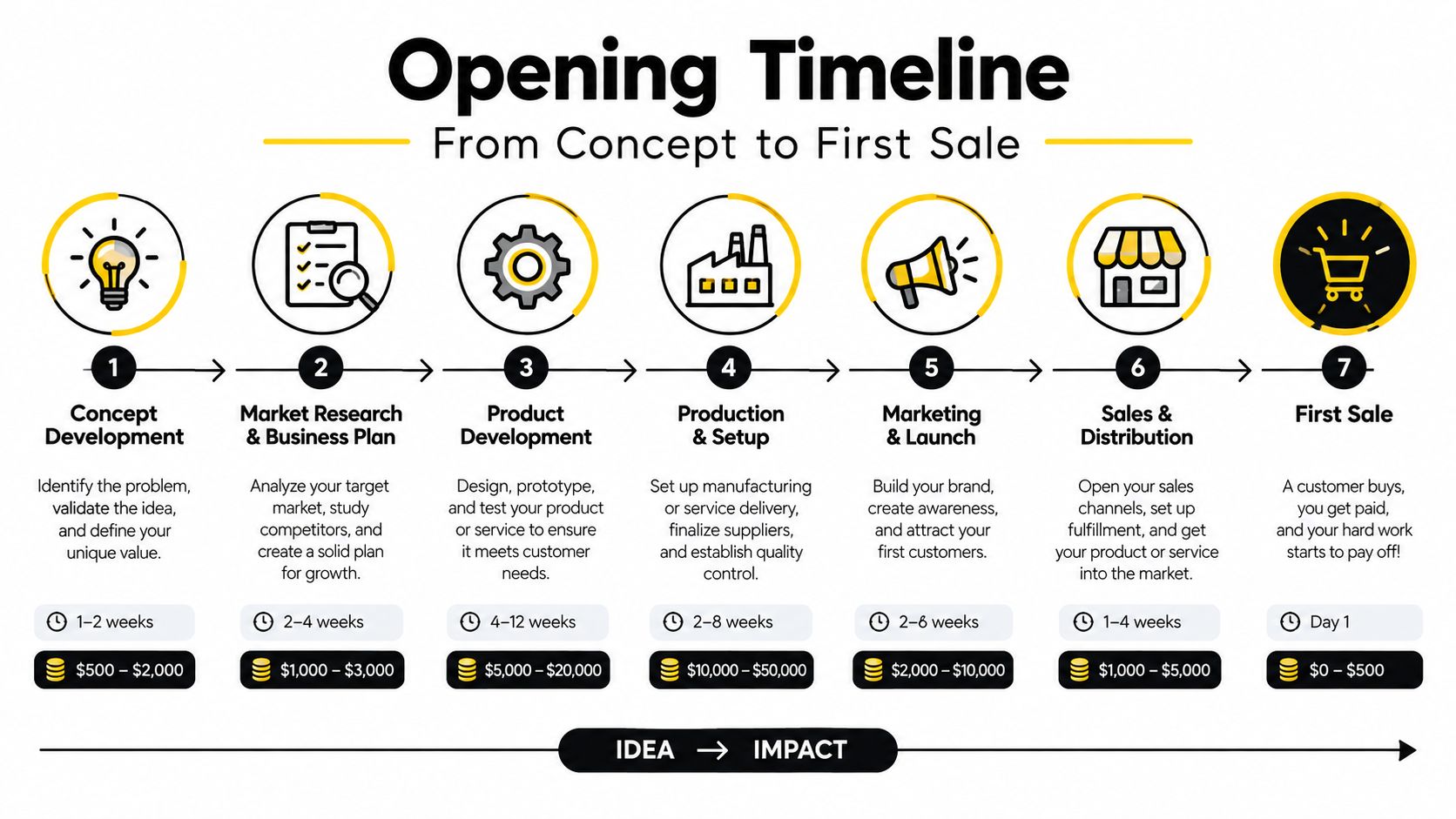
Opening Timeline From Concept to First Sale
Launch phases, timing and decision gates
| Phase | Typical timing | Output | Go/no-go gate |
|---|---|---|---|
| Concept and demand test | Months 1-2 | Concept statement and tested lunch menu | Repeat lunch demand confirmed with real customers |
| Business plan and funding | Months 2-3 | Budget with a working reserve | Reserve covers at least three months of fixed costs |
| Site search and lease | Months 3-5 | Shortlisted site and conditional lease subject to plan approval | Landlord allows food use and adequate ventilation |
| Permits and plan review | Months 4-6 | Approved plans and licence applications | Authority approves layout and equipment list |
| Build-out and equipment | Months 5-7 | Installed equipment and written HACCP-style plan | Cooling and holding tested with water loads |
| Hiring and training | Final 2-4 weeks | Trained team and training records | Every role passes a supervised shift |
| Soft launch | 1-2 weeks | Logged service data and cooling records | Batch logs and waste numbers reviewed |
These are planning estimates, not industry averages. Allow roughly four to seven months for the project, then replace that estimate with local authority response times and written contractor commitments. Permit queues and contractor lead times can shift the middle phases substantially.
Use the timeline to check dependencies before committing funds.
Make each gate a documented decision
A gate needs a clear yes-or-no answer backed by something tangible, such as paid test orders, a supplier quotation, an approved drawing or a cash-flow forecast. Friends' enthusiasm does not confirm repeat lunch demand. A landlord's verbal assurance does not approve extraction.
Set the menu, pricing and cooling requirements before finalising the budget. Then assess shortlisted sites against those requirements, and make any lease conditional on plan approval. Signing before review can lock you into costly changes. Ordering a slicer before checking cleaning access creates the same kind of avoidable commitment.
A launch date is a target. Spend the next portion of your budget only when the evidence supports it.
The U.S. Bureau of Labor Statistics reported that 34.7% of U.S. private-sector establishments born in March 2013 were still operating in March 2023. This broad business benchmark is not a deli failure rate. It does, however, underline why working capital should not all be spent before opening day.
Prepare customer-facing information while approvals progress. Follow this guide to adding a restaurant to Google Business Profile. If you'll have seating, set up a free commission-free booking page alongside telephone reservations.
Copy the table into a project tracker, assign one named owner per gate, and review open decisions weekly until the soft launch.
Menu Strategy, Pricing and Allergen Management
Demand occasions, product mix and what to measure
| Demand occasion | Product mix | What to measure |
|---|---|---|
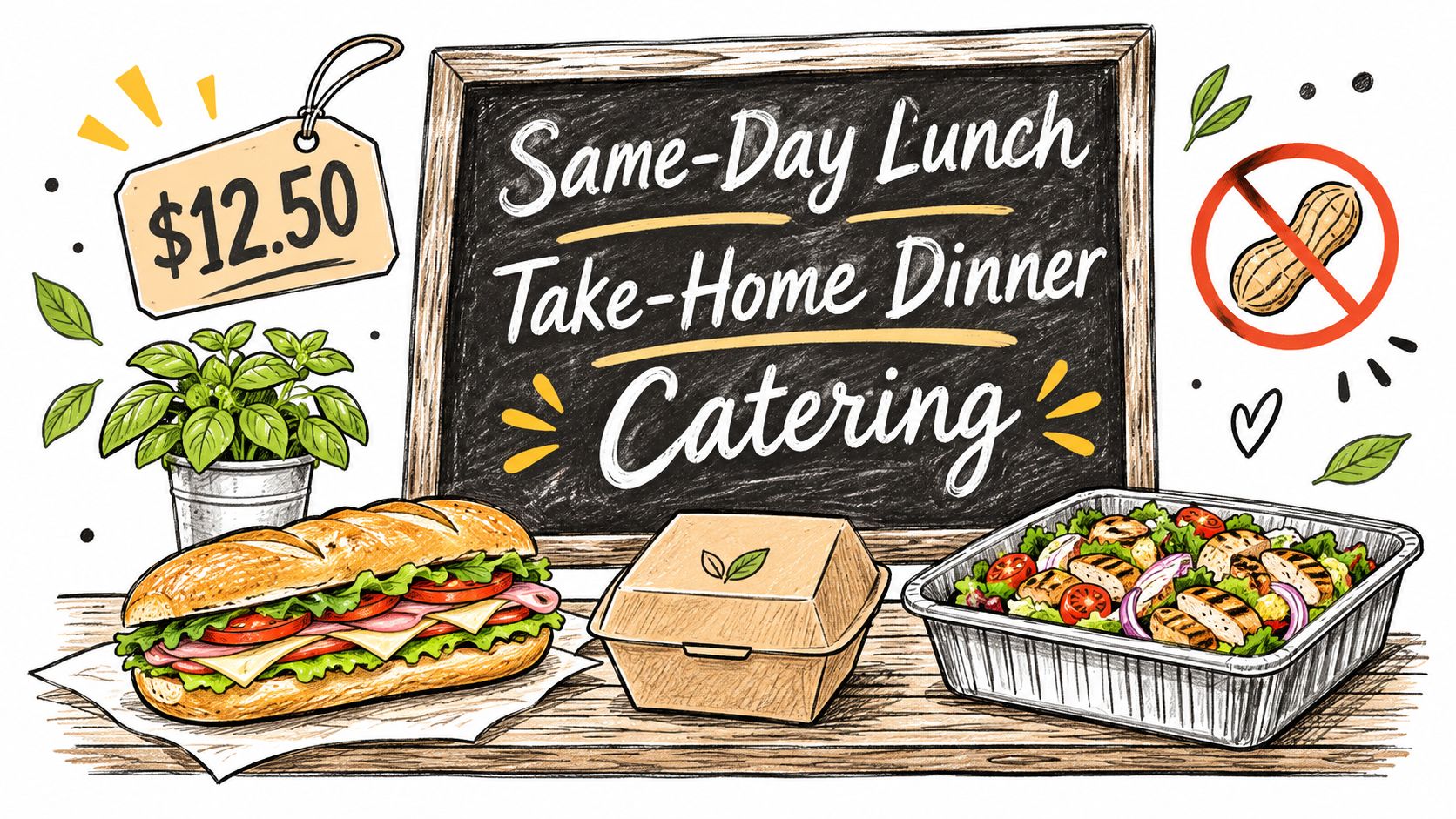
| Same-day lunch | Sandwiches, salads, hot soup, one daily special | Sales by hour and sell-out time |
| Take-home dinner | Roast meats, sides, ready meals for two | Contribution margin per meal |
| Catering | Platters and boxed lunches with a lead-time rule | Lead time, waste and margin per order |
| Breakfast | Bagels, egg items, coffee | Spoilage of cooked egg products |
| Grab-and-go | Chilled packs and wrapped items near the till | Sell-through before the afternoon cut-off |
Test these occasions separately. Breakfast can add trading hours without adding enough profit, while catering can occupy the preparation space you need for lunch.
The Culinary Visions deli report puts prepared foods and meals at 55.8% of U.S. deli sales, with 5.6% dollar growth. That supports a prepared-food concept, not a cold-cuts counter with meals added as an afterthought.
Make the offer understandable before customers reach the till.
Price recipes, not competitors' sandwiches
I'd start with three lunch anchors: a signature sandwich, a substantial salad and a hot meal or soup combination. Share ingredients where it makes operational sense, but don't make every product taste like a rearrangement of the same filling.
Weigh ingredients, record usable yield and include sauces, garnishes and packaging. Calculate a candidate selling price by dividing recipe food cost by your chosen food-cost percentage.
For a hypothetical planning test, try a food-cost range of 28-35%, not as a universal standard. Then check contribution after packaging, payment charges and other sale-linked costs; an attractive food-cost percentage can still leave too little cash to cover labour and rent.
Track waste by item every week. If you discard more portions than you sell, reduce the batch, change the production day or remove the item.
Use a free menu creator to maintain the selling version, and follow a practical workflow to create a digital menu with photos. Photograph actual portions rather than promising a larger meal than the counter supplies.
Keep allergen information under version control
For EU delis, the European Commission's allergen guidance identifies 14 regulated allergens: cereals containing gluten, crustaceans, eggs, fish, peanuts, soybeans, milk, nuts, celery, mustard, sesame, sulphur dioxide and sulphites above 10 mg/kg or 10 mg/L, lupin and molluscs. Non-prepacked food needs accessible allergen information, with written information available where verbal communication is used.
Maintain one controlled allergen matrix per recipe and a clearly signposted central information point. The Food Safety Authority of Ireland's guidance explains how written information can be provided centrally, including electronically.
Publish the current matrix through a free allergen menu tool. Review it whenever recipes or supplier specifications change, and distinguish ingredient information from assurances about cross-contact.
Owners in the UK, Canada, Australia and the US should confirm local requirements rather than copy EU rules. If tourists are a substantial audience, use AI menu translation, then check dish names and safety wording before publishing.
Business Plan, Demand and Startup Budget
Startup budget lines and how to estimate them
| Budget line | What it covers | How to estimate |
|---|---|---|
| Lease deposit and first rent | Deposit, first and last month where required | Landlord quote and lease terms |
| Build-out and fit-out | Ventilation, grease trap, sinks, floors, walls | Two or three contractor quotes with a contingency line |
| Equipment | Display case, slicer, reach-in and under-counter fridges, blast chiller, hot holding | New and used quotes per item |
| Licences and insurance | Permits, plan review, liability cover | Local authority fee schedule and insurer quote |
| Opening inventory | First stock, packaging, cleaning supplies | Menu cost multiplied by planned par levels |
| Wages before first sale | Four to six weeks of staff pay and training as a planning allowance | Staffing plan multiplied by hours |
| Working reserve | Three to six months of fixed costs as a planning allowance | Rent, utilities, payroll and loan payments added together |
Treat the allowances in this table as budget assumptions to test, not published opening-cost benchmarks. Obtain written quotations for major purchases, with installation, delivery, commissioning and removal of old equipment listed separately.
Used equipment is worth considering when a technician can inspect it and parts remain available. A cheap refrigerator that can hold chilled stock isn't necessarily capable of cooling your production load.
Work backwards from break-even
Keep build-out spending separate from operating cash. Capital Express's guide can help you plan your startup expense budget, but your final amounts must come from the actual premises, menu and employment obligations.
Hypothetical worked example: a deli with fixed operating costs of 6,000 per month and a 65% contribution margin needs approximately 9,200 in monthly sales to cover those costs. The calculation is fixed costs divided by contribution margin, rounded for planning.
The FoodNavigator report on FMI's 2024 U.S. retail-foodservice research says consumers bought fresh, ready-to-eat deli products an average of 9.5 times annually, with an $8.30 average transaction. These are U.S. benchmarks, not forecasts for your neighbourhood.
Applying that transaction value to the hypothetical sales target means approximately 1,100 transactions monthly, or roughly 37 daily across a hypothetical 30-day trading month. Replace that illustration with your own basket value and actual opening days before making a lease decision.
Budget discipline: Don't use national demand to justify a local rent. Count the customers who could realistically reach your counter.
Test whether the required trade exists
Count nearby office workers, clinic visitors, students and residents during the hours you intend to trade. Separate passing pedestrians from people who can stop, enter and buy within their lunch break.
Record competing offers, queues, prices and collection arrangements. A busy street with awkward access can be less useful than a quieter frontage beside a dependable workplace lunch route.
Include an owner's wage in the operating model. Keep loan repayments, taxes and equipment replacement visible in the cash-flow forecast even where their accounting treatment differs from operating expenses.
Write break-even sales and required daily transactions on the first page of the business plan. Don't open until paid demand tests and counted local traffic make that target credible.
Choosing a Site, Layout and Suppliers
Look for lunch traffic within a short walk of offices, clinics or schools, with a display case visible from the street. Check accessible entry, floor drainage where required, ventilation, grease management and enough refrigeration for your planned delivery cycle.
Get written permission for food preparation from the landlord. A retail lease doesn't automatically permit cooking, extraction or alterations.
Walk the product route
Arrange receiving and packaged inputs at one end, a separate slicing zone with dedicated utensils, and finished ready-to-eat food moving towards the counter. Provide convenient handwashing and never store raw meat above ready-to-eat products.
The CDC's retail deli guidance identifies temperature monitoring, raw-food separation and cleaning in-use slicers at least every four hours as important contamination controls, including against Listeria.
- Price the essentials: Reach-in and under-counter refrigeration, display case, cleanable slicer, and a blast chiller or validated ice-bath setup.
- Buy for the menu: Add hot-holding equipment only where the planned products justify it.
- Qualify suppliers: Obtain delivery-temperature requirements, labelled product specifications and allergen declarations, with backup suppliers for critical categories.
Reject temperature-controlled deliveries outside your acceptance specification or without required identification. Walk the delivery-to-counter route with a stopwatch, including unpacking and handwashing, and sign only when staff can complete it without crossing incompatible tasks.
Licensing and Food-Safety Controls That Pass Inspection
Food-safety limits and check frequency for a deli
| Control | Limit or standard | Check frequency |
|---|---|---|
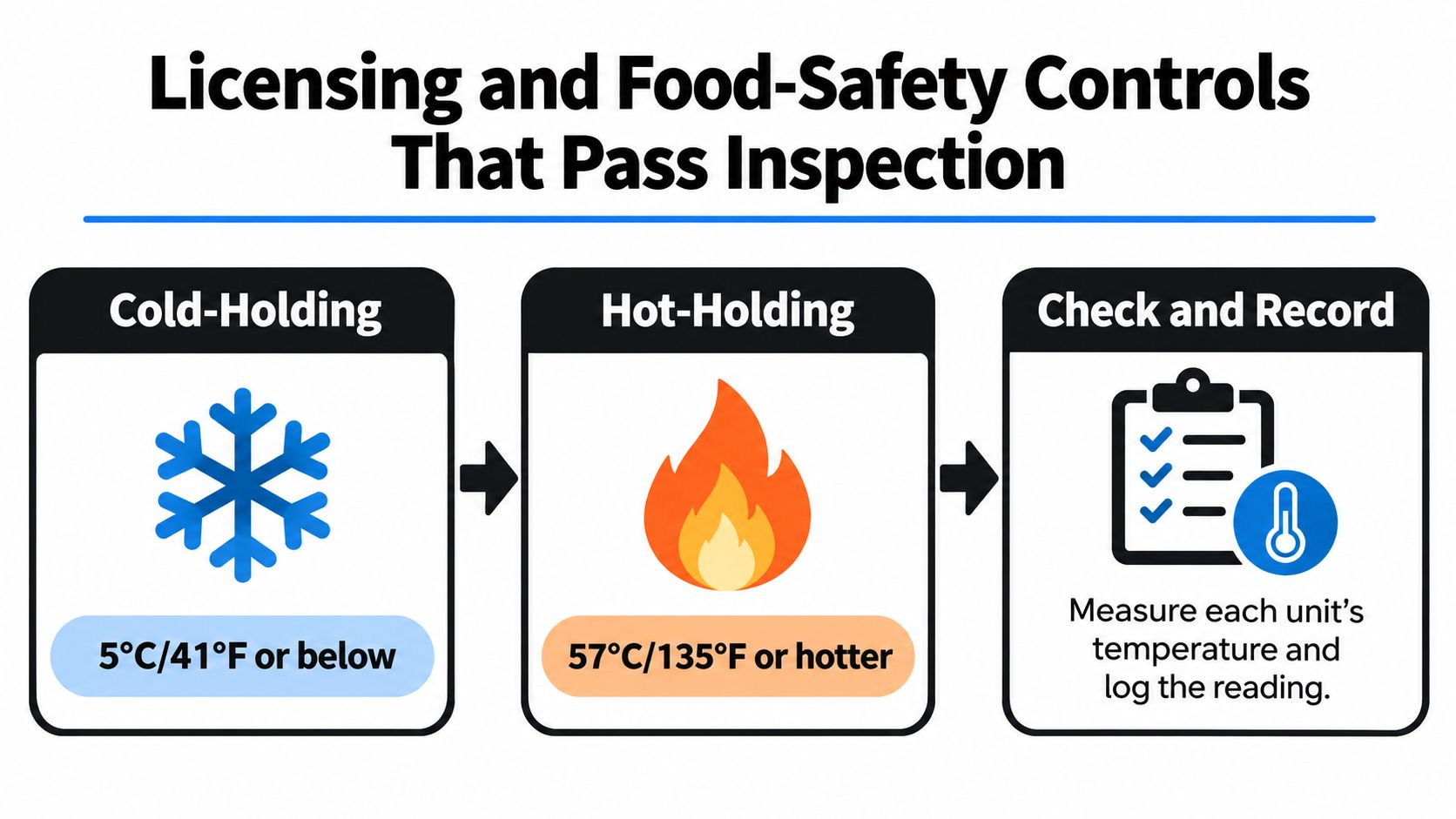
| Cold-holding TCS foods | 5°C/41°F or below | Opening, mid-shift, closing and after any alarm |
| Hot-holding foods | 57°C/135°F or hotter | Every service period |
| Cooling stage one | From 57°C/135°F to 21°C/70°F within 2 hours | Every cooked batch, logged |
| Cooling stage two | From 21°C/70°F to 5°C/41°F or below within a further 4 hours | Every cooked batch, logged |
| Slicer cleaning | At least every 4 hours in use | Recorded on the cleaning log |
| Refrigerator calibration | Compare with a calibrated thermometer, not just the display dial | Weekly verification check |
The holding and cooling limits above follow the FDA Food Code guidance; the slicer standard follows CDC retail-deli guidance. Check frequencies are a proposed operating schedule, and local rules can be stricter or different. TCS means food requiring time and temperature control for safety.
Build measurement into the work, rather than asking employees to reconstruct readings after service.
Get approval before construction
Use this licensing sequence, adapting the names and requirements to your jurisdiction:
- Confirm zoning and register the premises with the local food authority through its required process.
- Submit floor plans, the production method and equipment specifications for any required plan review before build-out.
- Complete required qualifications, including food-safety manager and food-handler training where applicable.
- Book the pre-opening inspection and close out deficiencies before trading.
- Keep licences and inspection records on site, displaying the documents your authority requires.
New Zealand operators can use NZ compliance advice from Simply Hospitality to orient their questions before confirming requirements with the relevant authority. Don't assume an overseas temperature table substitutes for a locally approved food-control system.
Before construction, write a HACCP-style control plan. Map receiving, storage, preparation, cooking, cooling, display and service, then identify biological, chemical and physical hazards at each step.
For each significant hazard, state the acceptance limit, checking method, responsible role and corrective action. Prioritise receiving temperatures, refrigerator verification, ready-to-eat segregation, slicer sanitation, cooling and date-based rotation.
Validate the largest cooling load
Use shallow metal pans, smaller portions, ice baths or rapid-cooling equipment. During active cooling, leave containers uncovered or loosely covered where protected from contamination, and preserve airflow around them.
The important capacity isn't how many containers fit inside the refrigerator. It's how much hot product the equipment can cool safely while keeping neighbouring food cold.
Capacity rule: If the planned production batch can't cool safely, reduce the batch or change the equipment before increasing sales.
Test water loads during equipment commissioning, then validate the actual recipes and portion depths. Water tests alone don't prove that dense fillings or deep pans of sauce will cool at the same rate.
Keep a batch log containing:
- Identification: Product, batch reference and responsible employee.
- Measurements: Cooling start time, intermediate temperature and final temperature.
- Disposition: Corrective action, authorisation and whether the batch was retained or discarded.
If a batch misses either cooling limit, isolate it and follow the local authority's approved disposition rule. Don't put it back in the refrigerator and hope.
Treat salads, cooked meats, sauces and egg products as traceable lots with preparation time and discard date. Managers should verify records, not merely collect completed sheets.
Use this video alongside the written procedures during preparation for opening.
Keep a restaurant allergen compliance checklist with the operating documents so supplier substitutions receive a safety review before service.
Calibrate probe thermometers weekly as an operating routine, and after damage or questionable readings, following the instrument's method. Trust a properly taken product-temperature reading, not appearance or a display-case dial.
Staffing, POS and QR Menu Tech
Organise work around prep and slicing, counter service, and shift supervision. People can share roles, but the shift lead mustn't be the only employee who understands batch records or corrective actions.
Size the roster from sales by hour and the tasks surrounding service, including receiving, preparation and closing. A quiet counter doesn't mean the kitchen has spare capacity.
Give each tool a clear job
- Training records: Use written procedures and signed role checklists, then observe employees during the busiest service. Collect recurring service problems through a restaurant feedback form, rather than relying on informal comments.
- Point of sale: Choose item-level sales, void and discount reporting. Reconcile those reports with production and discard records; till data alone can't explain waste.
- Digital menu: Follow a straightforward process to make a digital menu, with a named employee responsible for availability changes.
- Counter access: Use a free QR-code generator for counter, table and receipt signage, and test each printed code on a customer's phone.
A QR menu doesn't replace human help. Staff must be able to locate the current allergen sheet and explain where reliable information is available without guessing.
Keep the core tools free during launch. An optional Pro plan can add full AI translation and branding, but those upgrades shouldn't displace refrigeration, adequate staffing or working capital.
Confirm Your Launch Checklist Before Opening Day
Before announcing the opening, check that customers can find the deli, see the current offer and take the next step. Use the location's dedicated page for actions such as reservations or ordering, following Google Business Profile's business-link guidance, rather than linking to a general homepage.
For a deli with seating, a free commission-free booking page gives guests a direct way to reserve, with email confirmations and reminders to help reduce no-shows. Link the page from the profile's booking action, Instagram, the digital menu and receipts. Keep a manual record of walk-ins so staff can avoid conflicts with reservations.
Ask for honest feedback without filtering reviewers
Give every diner the same neutral invitation to share feedback. A private restaurant feedback form can alert the manager to a low rating, making it easier to follow up privately when the guest has provided contact details.
Make the option to leave a public review available to every diner, whatever their private rating. Do not offer incentives or direct only satisfied guests to the review page. Google's fake-engagement policy prohibits incentivised or biased review manipulation and allows reviews to be removed or profiles restricted.
Resolve complaints on their merits. Ask what happened, check the order and offer an appropriate remedy. Do not make that remedy conditional on a public review or a better rating.
Use the checklist to sign off each launch control, rather than relying on a general sense of readiness.
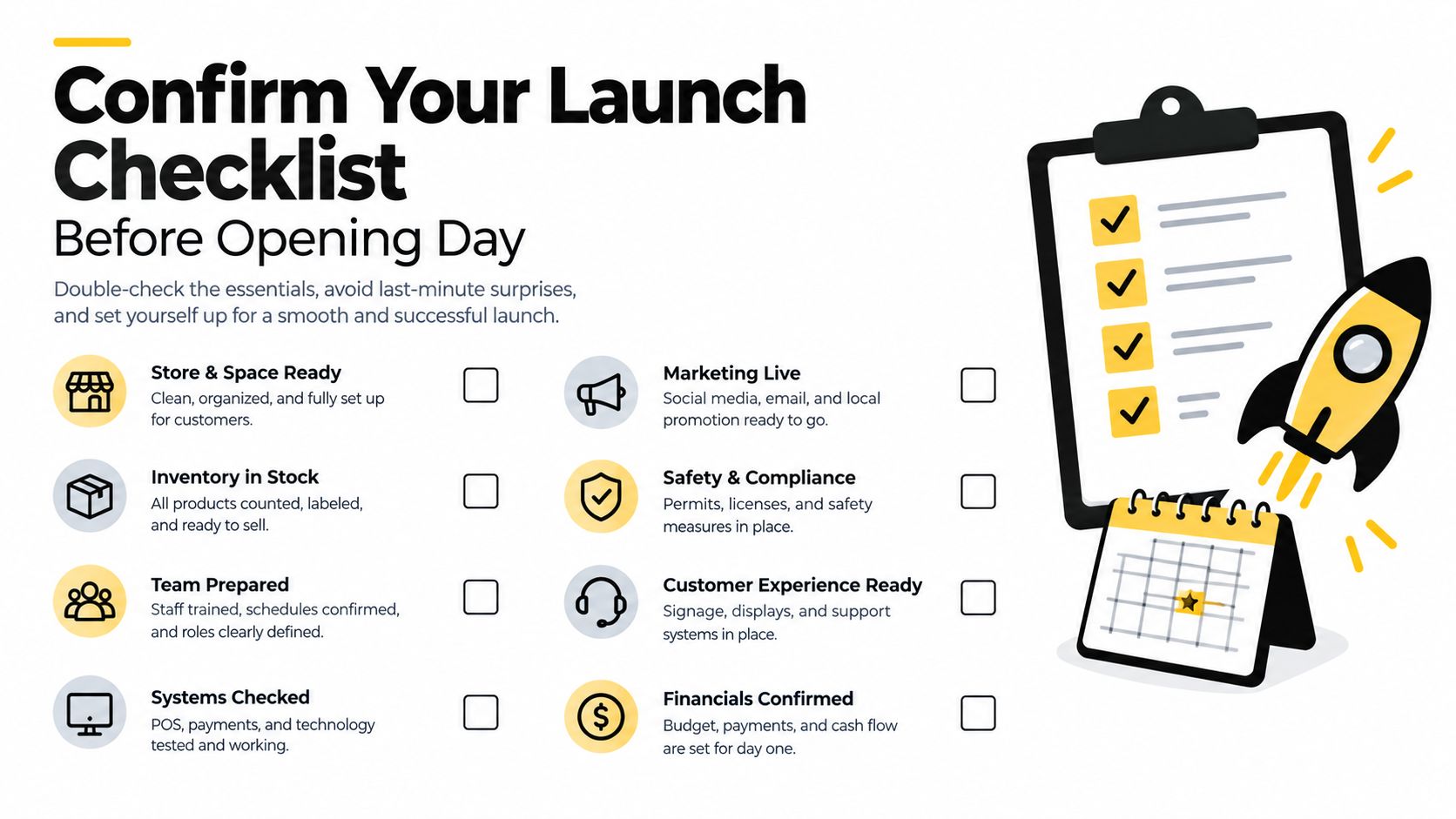
Sign off readiness in writing
- Permits displayed: Required permissions are issued, accessible and displayed where legally necessary.
- Cooling logs tested: A simulated service produced complete, believable batch records.
- Allergen matrix published: The counter copy and customer-facing version match approved recipes.
- Equipment calibrated: Probes are checked and refrigeration performance has been verified.
- QR code live: Printed signage opens the current menu, with an alternative for guests without phones.
- Booking page live: Availability, location details and email confirmations have been tested.
- Google profile complete: Address, opening hours, contact details and action links are correct.
- Staff trained: Every employee has demonstrated the tasks assigned to their role.
Check sold-out handling before service, too. Assign one person to update the QR menu in real time, and make sure counter staff can tell customers when a dish is no longer available. That prevents the menu and the prepared-meal offer from drifting apart.
This week, complete the checklist and book a provisional soft-launch date. Keep the opening offer narrow enough to review service records, product losses and customer comments before committing to a larger production schedule. Use those checks to decide what to adjust first: the menu, the quantities prepared or the service process.