How to Comply with Allergen Labeling Laws in Your Restaurant: A Complete Guide
Navigating the legal landscape of the hospitality industry is demanding. Between health inspections and tax filings, one of the most critical — yet often mismanaged — areas is allergen labeling. Across most countries, failing to inform customers about allergens isn't just a mistake; it's a legal liability that can result in heavy fines and, more importantly, risk to your customers' lives.
Understanding the Legal Framework
Most countries and regions have enacted food information laws requiring all food businesses — including restaurants, cafés, and hotels — to provide clear, accessible information about the allergens present in their dishes. Whether it's EU Regulation 1169/2011, UK food labeling law, local health codes in the Americas, or equivalent legislation in Asia-Pacific, the core obligations are remarkably consistent. Key requirements typically include:
- Allergen information must be easily accessible before the purchase is made.
- It must be clear, legible, and kept up to date.
- Staff must be trained to handle allergen-related inquiries.
The 14 Allergens You Must Disclose
By law, you must identify if any of the following are present in your dishes:
The Problem with Traditional Paper Menus
Most restaurants try to comply by printing a grid at the back of their menu or using icons. This approach has three major flaws:
- Inflexibility: If you change a supplier, a brand of sauce, or a recipe, you have to reprint every single menu — or risk serving outdated allergen information.
- Human error: Servers under pressure may forget a minor ingredient when answering allergen questions verbally.
- Poor guest experience: Customers with severe allergies often feel uncomfortable asking too many questions, leading to anxiety and a negative dining experience.
How a Digital Menu Solves Compliance in 5 Minutes
A QR-based digital menu automates allergen compliance so you can focus on running your restaurant.
Instant updates
Did your supplier change the bread brand? Update the allergen information in your dashboard once and it reflects immediately on every table. No reprinting, no stickers, no outdated information circulating in the wild.
Interactive allergen filtering
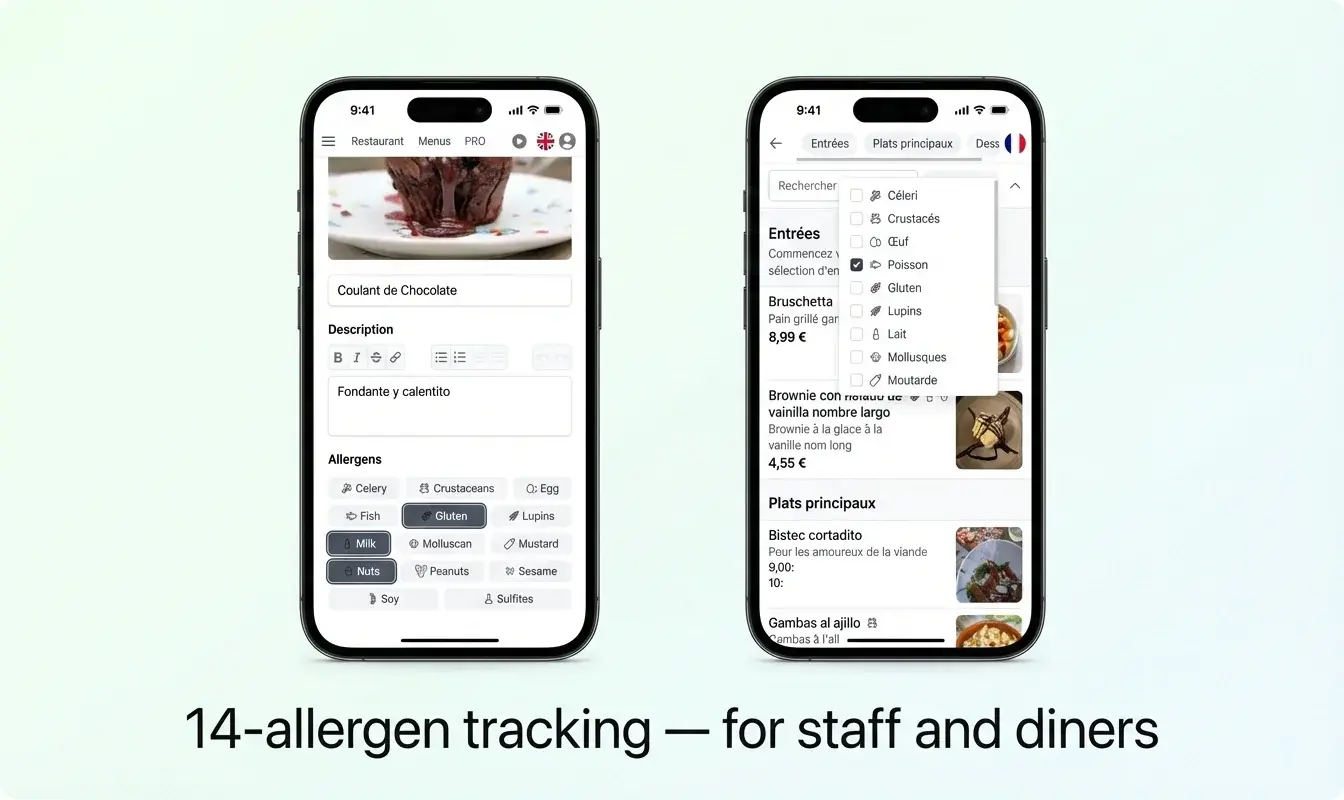
Instead of a confusing grid, guests can use their phones to filter the menu by allergen. A gluten-intolerant customer simply toggles "Gluten-Free" and sees exactly what they can safely order. This reduces pressure on your staff and empowers the customer to make confident choices.
Multilingual compliance
If you operate in a tourist-heavy area, you are still legally required to provide allergen information. A digital menu lets you display allergen data in English, Spanish, and dozens of other languages simultaneously — ensuring no critical information is lost in translation.
5 Steps to Make Your Restaurant 100% Compliant
-
Sprawdź swoje składniki
Sprawdź karty charakterystyki każdego produktu w swojej spiżarni i ustal, które z 14 alergenów zawierają.
-
Zd cyfryzuj swoje menu
Prześlij swoje dania na platformę taką jak TopFood App — zajmuje to kilka minut i nie wymaga wiedzy technicznej.
-
Oznacz alergeny
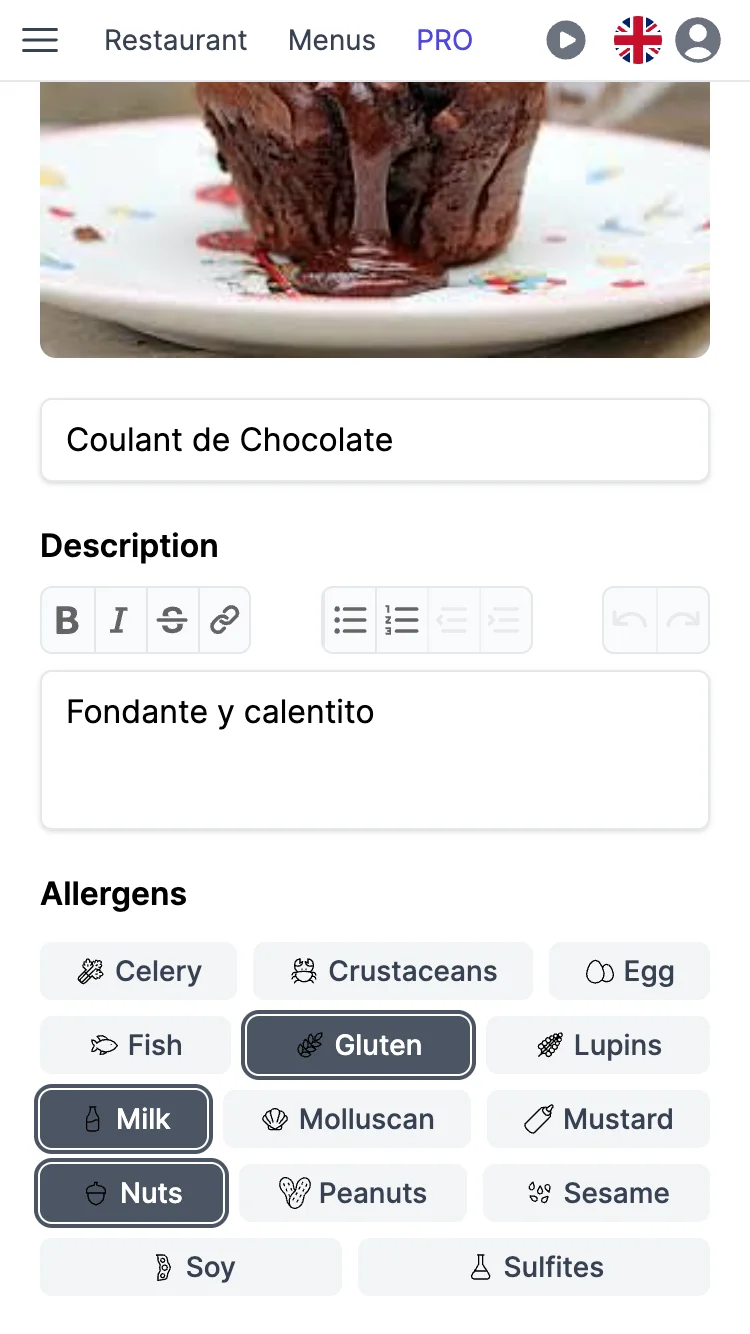
Użyj prostego systemu przełączników, aby oznaczyć 14 obowiązkowych alergenów przy każdym daniu. Twoje menu aktualizuje się natychmiast.
-
Wyeksponuj swoje kody QR
Umieść je w widocznych miejscach na stolikach, przy wejściu lub na swojej stronie internetowej, aby goście mogli uzyskać dostęp do menu, zanim jeszcze usiądą.
-
Przeszkol swój zespół
Upewnij się, że personel wie, jak pokierować klientów do cyfrowego menu, aby uzyskać najbardziej dokładne i aktualne informacje o alergenach.
Bezpieczeństwo to dobry interes
Zgodność z przepisami nie powinna być uciążliwością. Przechodząc na darmowe cyfrowe menu alergenowe, nie tylko unikasz kar — budujesz zaufanie. W erze, gdy nadwrażliwości pokarmowe rosną, bycie "bezpieczną" restauracją w okolicy to potężna przewaga konkurencyjna, która zamienia pierwszych gości w stałych klientów.
Najczęściej zadawane pytania
Czy mój kraj wymaga oznaczania alergenów w restauracjach?
Praktycznie na pewno tak. Unia Europejska, Zjednoczone Królestwo, Stany Zjednoczone, Kanada, Australia i wiele innych krajów mają przepisy dotyczące informacji o żywności, które wymagają od restauracji i firm spożywczych ujawniania głównych alergenów obecnych w ich potrawach. Sprawdź lokalny organ ds. bezpieczeństwa żywności, aby poznać szczegółowe wymagania w Twoim regionie.
Czy muszę wyświetlać informacje o alergenach, nawet jeśli mam małą kawiarnię?
W większości jurysdykcji przepisy dotyczące alergenów żywnościowych obowiązują wszystkie podmioty zajmujące się żywnością niezależnie od wielkości — restauracje, kawiarnie, food trucki, restauracje hotelowe i stołówki są objęte regulacjami. W razie wątpliwości skonsultuj się z lokalnym organem ds. bezpieczeństwa żywności.
Co się stanie, jeśli klient będzie miał reakcję, a moje informacje o alergenach były błędne?
Poza ludzkimi kosztami możesz ponieść znaczną odpowiedzialność prawną, w tym grzywny i roszczenia cywilne. Utrzymywanie dokładnych i łatwo dostępnych informacji o alergenach jest zarówno wymogiem prawnym, jak i obowiązkiem dbania o gości.
Czy klienci mogą sami filtrować cyfrowe menu według alergenów?
Tak. W TopFood App goście mogą przełączać dowolny z 14 głównych alergenów bezpośrednio na swoim telefonie i natychmiast zobaczyć tylko te potrawy, które są dla nich bezpieczne do zamówienia.