How to Comply with Allergen Labeling Laws in Your Restaurant: A Complete Guide
Navigating the legal landscape of the hospitality industry is demanding. Between health inspections and tax filings, one of the most critical — yet often mismanaged — areas is allergen labeling. Across most countries, failing to inform customers about allergens isn't just a mistake; it's a legal liability that can result in heavy fines and, more importantly, risk to your customers' lives.
Understanding the Legal Framework
Most countries and regions have enacted food information laws requiring all food businesses — including restaurants, cafés, and hotels — to provide clear, accessible information about the allergens present in their dishes. Whether it's EU Regulation 1169/2011, UK food labeling law, local health codes in the Americas, or equivalent legislation in Asia-Pacific, the core obligations are remarkably consistent. Key requirements typically include:
- Allergen information must be easily accessible before the purchase is made.
- It must be clear, legible, and kept up to date.
- Staff must be trained to handle allergen-related inquiries.
The 14 Allergens You Must Disclose
By law, you must identify if any of the following are present in your dishes:
The Problem with Traditional Paper Menus
Most restaurants try to comply by printing a grid at the back of their menu or using icons. This approach has three major flaws:
- Inflexibility: If you change a supplier, a brand of sauce, or a recipe, you have to reprint every single menu — or risk serving outdated allergen information.
- Human error: Servers under pressure may forget a minor ingredient when answering allergen questions verbally.
- Poor guest experience: Customers with severe allergies often feel uncomfortable asking too many questions, leading to anxiety and a negative dining experience.
How a Digital Menu Solves Compliance in 5 Minutes
A QR-based digital menu automates allergen compliance so you can focus on running your restaurant.
Instant updates
Did your supplier change the bread brand? Update the allergen information in your dashboard once and it reflects immediately on every table. No reprinting, no stickers, no outdated information circulating in the wild.
Interactive allergen filtering
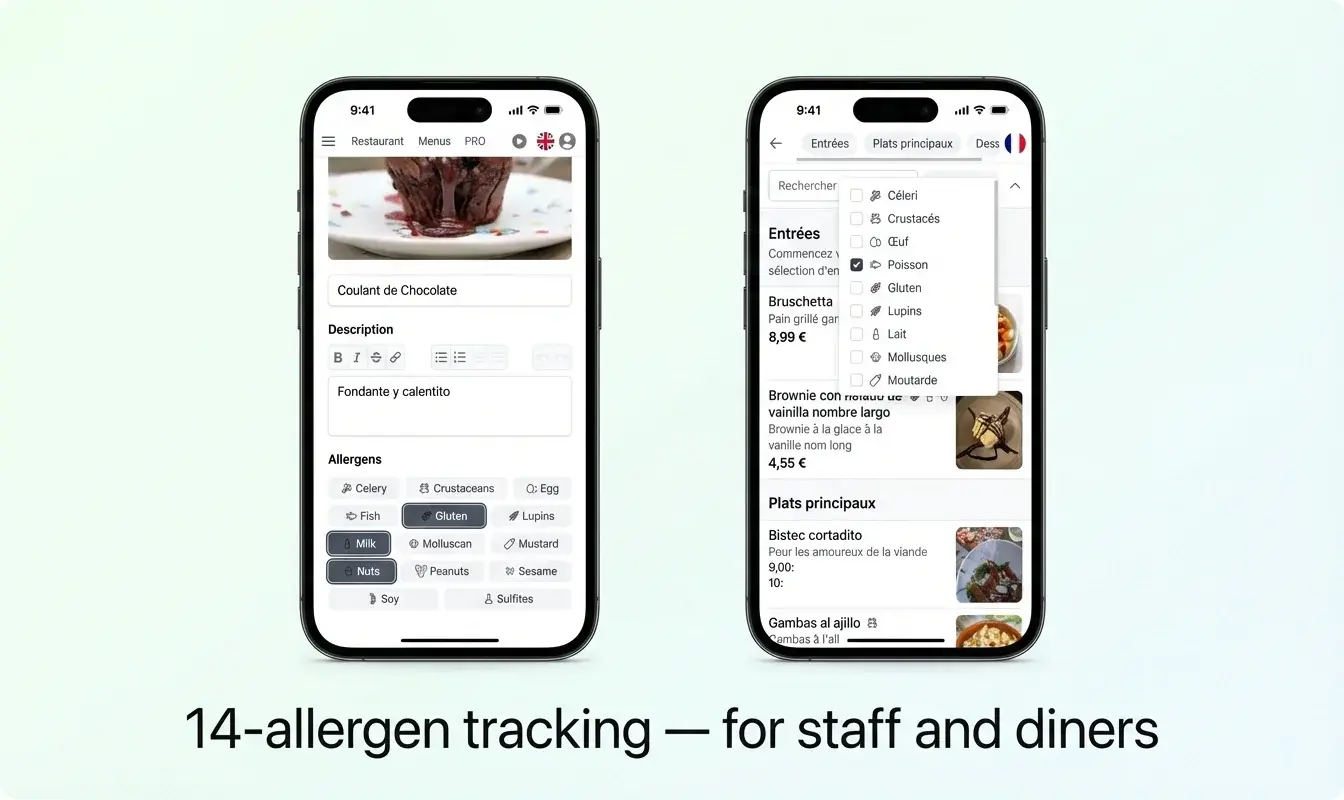
Instead of a confusing grid, guests can use their phones to filter the menu by allergen. A gluten-intolerant customer simply toggles "Gluten-Free" and sees exactly what they can safely order. This reduces pressure on your staff and empowers the customer to make confident choices.
Multilingual compliance
If you operate in a tourist-heavy area, you are still legally required to provide allergen information. A digital menu lets you display allergen data in English, Spanish, and dozens of other languages simultaneously — ensuring no critical information is lost in translation.
5 Steps to Make Your Restaurant 100% Compliant
-
अपने घटक ऑडिट करें
अपने पैंट्री में हर उत्पाद के तकनीकी डेटा शीट्स की जाँच करें और पहचानें कि वे 14 एलर्जेंस में से कौन-कौन से含 करते हैं।
-
अपने मेन्यू को डिजिटाइज़ करें
TopFood App जैसी किसी प्लेटफ़ॉर्म पर अपने व्यंजन अपलोड करें — इसमें मिनटों का समय लगता है और किसी तकनीकी ज्ञान की आवश्यकता नहीं होती।
-
अपने एलर्जेंस को टैग करें
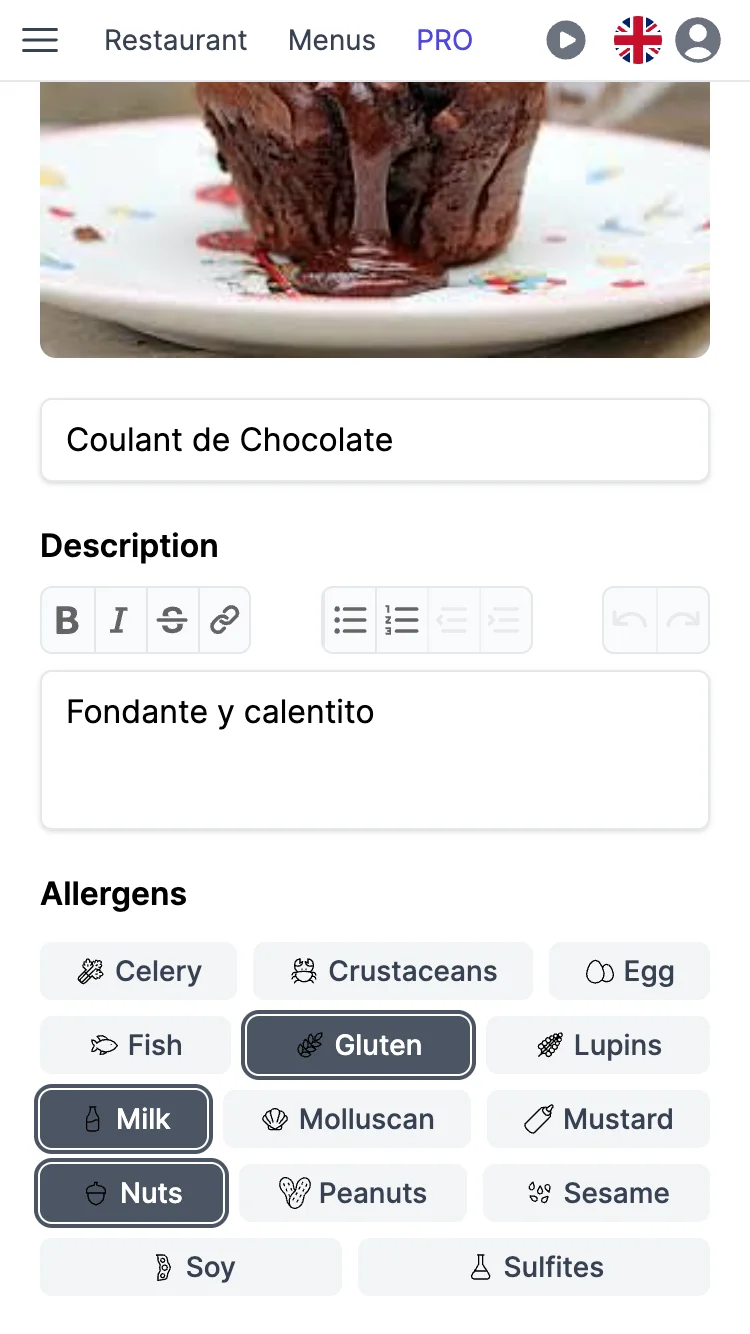
सरल टॉगल प्रणाली का उपयोग करके प्रत्येक व्यंजन के लिए 14 अनिवार्य एलर्जेंस को मार्क करें। आपका मेन्यू तुरंत अपडेट हो जाता है।
-
अपने QR कोड दिखाएँ
उन्हेंโต́n पर, प्रवेश द्वार पर, या अपनी वेबसाइट पर स्पष्ट रूप से रखें ताकि मेहमान बैठने से पहले मेन्यू एक्सेस कर सकें।
-
अपनी टीम को प्रशिक्षित करें
यह सुनिश्चित करें कि स्टाफ ग्राहकों को सबसे सटीक और अद्यतन एलर्जन जानकारी के लिए डिजिटल मेन्यू तक कैसे मार्गदर्शित करना है, यह जानता हो।
सुरक्षा व्यवसाय के लिए अच्छी है
अनुपालन बोझ जैसा महसूस नहीं होना चाहिए। एक मुफ्त डिजिटल एलर्जन मेन्यू पर स्विच करके आप केवल जुर्माने से बच नहीं रहे — आप विश्वास बना रहे हैं। ऐसे युग में जब खाद्य संवेदनशीलताएँ बढ़ रही हैं, पड़ोस का "सुरक्षित" रेस्तराँ होना एक शक्तिशाली प्रतिस्पर्धात्मक लाभ है जो पहली बार आने वाले मेहमानों को वफादार नियमित ग्राहकों में बदल देता है।
अक्सर पूछे जाने वाले प्रश्न
क्या मेरे देश में रेस्तराँ के लिए एलर्जन लेबलिंग आवश्यक है?
लगभग निश्चित रूप से हाँ। यूरोपीय संघ, यूनाइटेड किंगडम, संयुक्त राज्य अमेरिका, कनाडा, ऑस्ट्रेलिया और कई अन्य देशों में खाद्य जानकारी नियम हैं जो रेस्तराँ और खाद्य व्यवसायों को उनके व्यंजनों में उपस्थित प्रमुख एलर्जेंस का खुलासा करने के लिए बाध्य करते हैं। अपने क्षेत्र की विशिष्ट आवश्यकताओं के लिए अपने स्थानीय खाद्य सुरक्षा प्राधिकरण से जाँच करें।
क्या मुझे छोटे कैफ़े होने पर भी एलर्जन जानकारी दिखानी होगी?
अधिकांश क्षेत्रों में, खाद्य एलर्जन नियम आकार की परवाह किए बिना सभी खाद्य व्यवसायों पर लागू होते हैं — रेस्तराँ, कैफ़े, फूड ट्रक, होटल के रेस्तराँ और कैंटीन सभी शामिल हैं। शंका होने पर अपने स्थानीय खाद्य सुरक्षा प्राधिकरण से परामर्श करें।
अगर किसी ग्राहक को प्रतिक्रिया हुई और मेरी एलर्जन जानकारी गलत थी तो क्या होता है?
मानवीय लागत के अलावा, आपको महत्वपूर्ण कानूनी जिम्मेदारियों का सामना करना पड़ सकता है, जिसमें जुर्माने और नागरिक दावे शामिल हैं। एलर्जन जानकारी को सटीक और आसानी से उपलब्ध रखना न केवल कानूनी आवश्यकता है बल्कि आपके मेहमानों के प्रति एक देखभाल कर्तव्य भी है।
क्या ग्राहक खुद डिजिटल मेन्यू को एलर्जन के अनुसार फ़िल्टर कर सकते हैं?
हां। TopFood App के साथ, मेहमान अपने फोन पर सीधे 14 प्रमुख एलर्जेंस में से किसी को भी टॉगल कर सकते हैं और तुरंत केवल उन व्यंजनों को देख सकते हैं जो उनके लिए सुरक्षित हैं।