Why Do Restaurants Use 86 and What It Really Means
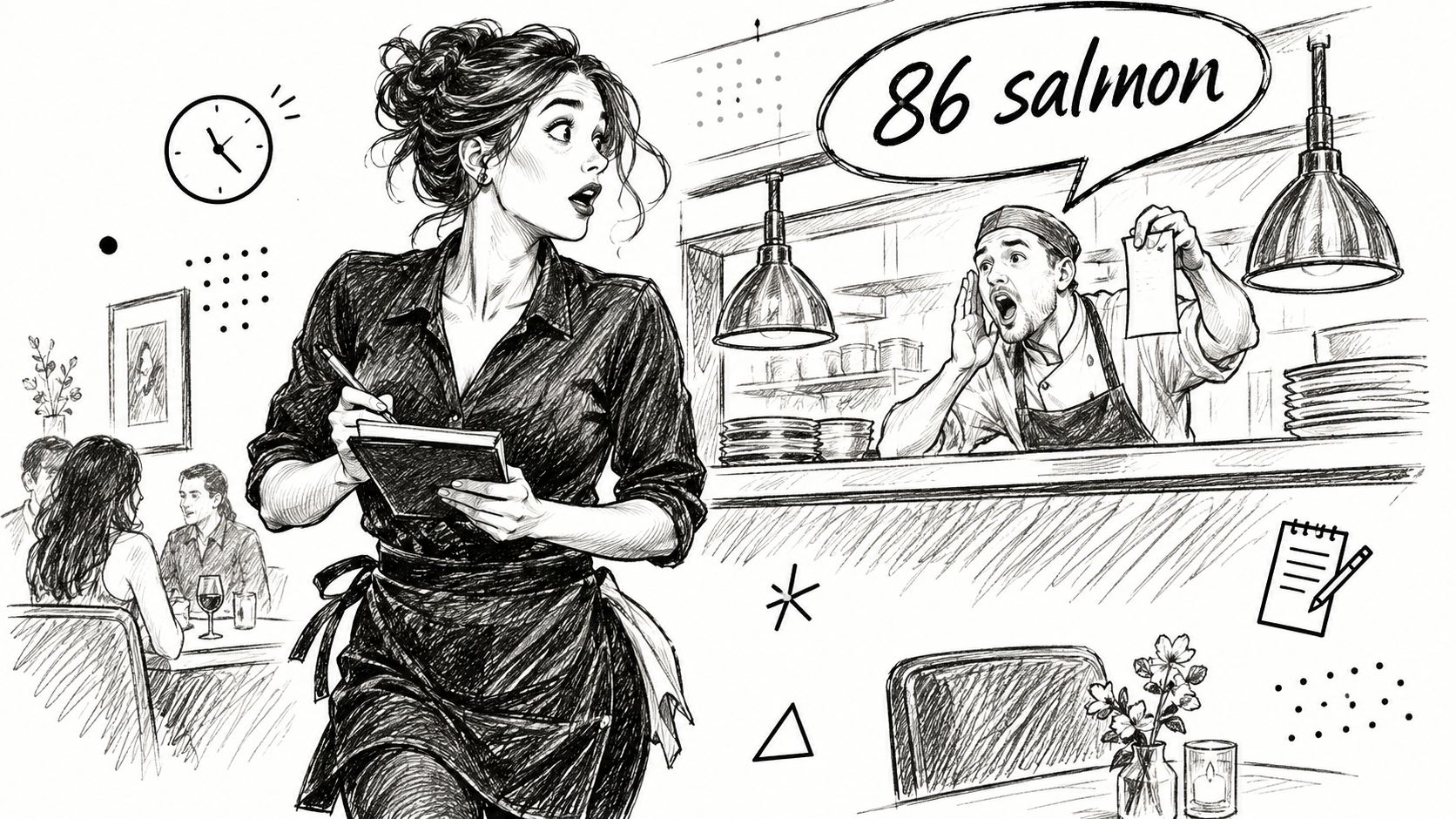
Friday-night service is in full swing. A server reaches table twelve, ready to take an order, when the kitchen calls, “86 salmon!” The server has to stop, remember which tables were considering the dish, warn the host and other servers, and make sure nobody rings it in again.
For a new restaurant employee, the phrase sounds mysterious. For an experienced team, it's a fast instruction with an immediate operational consequence. 86 means an item is unavailable or has been removed, although the same code can also refer to refusing service to a guest.
Understanding why do restaurants use 86 helps servers, cooks, bartenders, managers, and curious diners interpret a common piece of hospitality language. You'll learn what the code means, where it came from, how its meaning expanded, and what should happen after someone calls it during service.
The term also makes sense in modern restaurant systems. A shouted kitchen message can now trigger a POS change, an online menu adjustment, or a live QR-menu update. Restaurants that handle phone requests may also look into restaurant phone automation so staff can spend less time repeating availability information and more time managing the dining room.
The simplest answer is practical: restaurants use 86 because a short code moves important information quickly. To see why that matters, start with the basic meaning.
Table of Contents
- What 86 Means in Restaurant Language
- Where 86 Came From and How Its Meaning Grew
- Two Meanings of 86 Every Staff Member Should Know
- How Restaurants Use 86 During Real Service
- How to Communicate an 86 Without Frustrating Guests
- Smart Ways to Reduce 86s and Keep Menus Live
What 86 Means in Restaurant Language
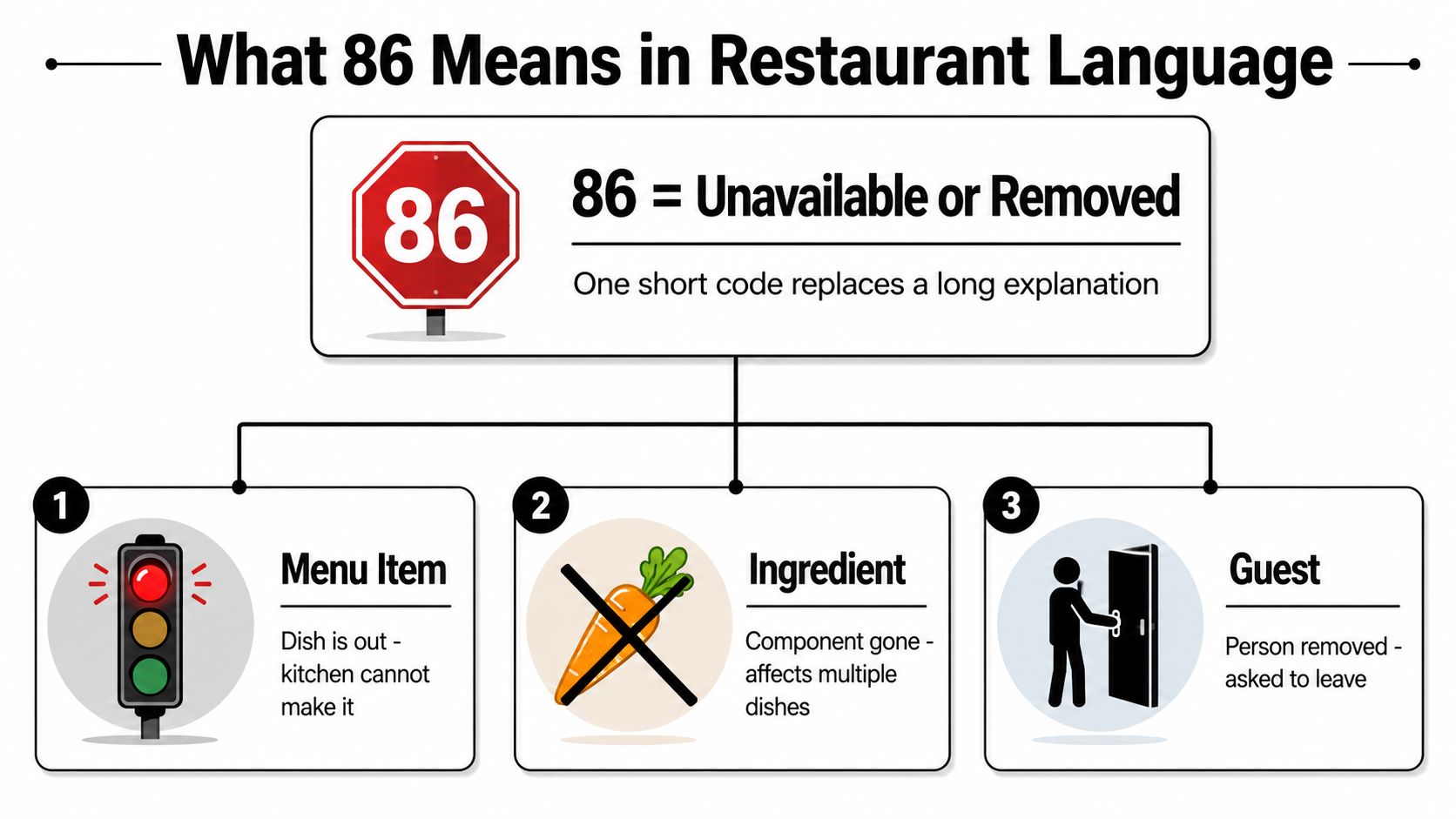
In restaurant language, to 86 an item means to mark it unavailable, remove it from sale, or stop promising it to guests. If a cook says, “86 the salmon,” the team should understand that the dish can no longer be ordered as presented. The reason might be an empty ingredient supply, an unusable component, or another service decision that makes the item unavailable.
Think of 86 as a red traffic light for the menu. Before the call, the dish is available and staff may recommend it. After the call, the light turns red. Servers should stop offering it, cashiers shouldn't ring it in, and the kitchen shouldn't accept a new ticket for it.
Core meaning: 86 is a compact restaurant code for something that's no longer available, should be removed, or must not continue through service.
Staff usually pronounce it as “eighty-six.” You may hear “86 the burger,” “the burger is 86'd,” or “we're 86 on burgers.” These versions point to the same operational change, although local habits vary from one workplace to another.
The everyday inventory meaning
The most common use concerns a menu item or ingredient. “86 shrimp” can mean the shrimp entrée is no longer available. “86 cilantro” can mean the ingredient has run out, which may affect several dishes. In both cases, the number replaces a longer sentence such as, “Please stop selling this because we can't complete it reliably.”
That compression matters during a rush. A kitchen doesn't have time to explain the entire stock situation while tickets are firing. The short code gives the front and back of house a shared status signal.
The broader removal meaning
86 can also mean remove or refuse, including refusing service to a guest or asking someone to leave. That use needs more care than an ordinary stock update. A manager should make sure the appropriate staff members understand what happened, who is handling the situation, and what the team should communicate.
So, when you hear the phrase, look at the object that follows it. “86 the soup” refers to availability. “86 that guest” refers to exclusion or removal. The number stayed the same because both uses express a decision to stop something from continuing.
Where 86 Came From and How Its Meaning Grew
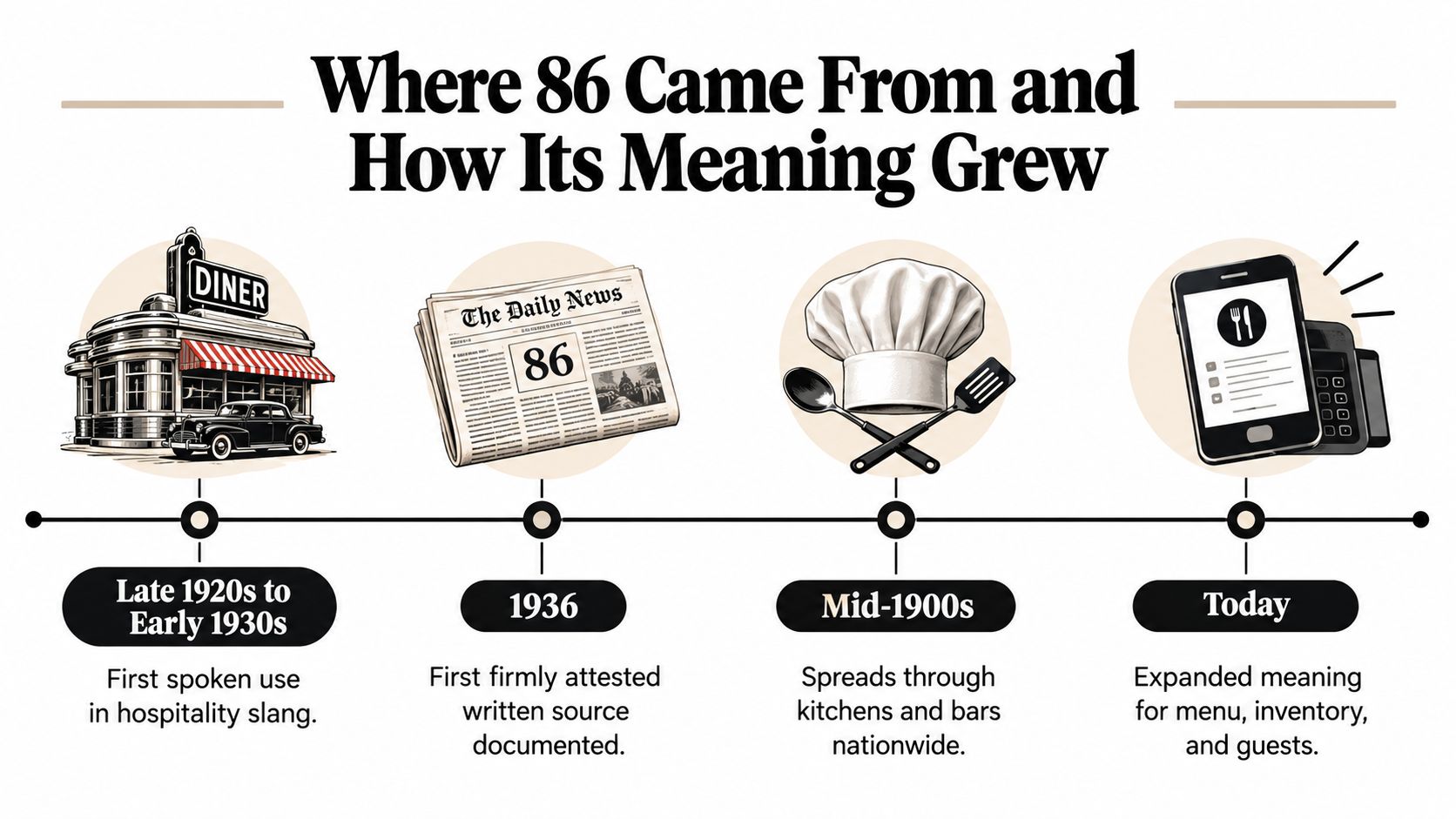
The history of 86 has a solid operational outline, even though its exact origin remains uncertain. The strongest historical evidence places restaurant use in the late 1920s or early 1930s, particularly in diners, soda fountains, bars, and similar hospitality settings. The first firmly attested written source appeared in American Speech in February 1936, according to the historical discussion at Worldwide Words.
That timeline matters because it places 86 in working hospitality language, not in modern internet slang. Busy dining rooms needed quick, standardized ways to tell colleagues that an item was gone. A short number was easier to call across a noisy room than a full explanation.
A documented shift in meaning
The earliest well-supported restaurant sense was practical: an item was out of stock or no longer available. Later written examples show the word spreading into related decisions. By 1943, 86 could mean denying service to a patron. By the 1950s, it could also mean discarding something.
The sequence tells a useful story. First, staff used the code for inventory control. Then it extended to customer control, when a person should no longer be served. Later, it took on a broader dismissal sense, covering things that needed to be removed entirely.
This kind of semantic growth is common in workplace language. A code created for one recurring task becomes familiar, then gets applied to another task with a similar result. In this case, the shared idea was simple: stop offering, stop serving, or remove.
Separating evidence from legends
Several popular stories attempt to explain the number. Some connect it with Prohibition-era speakeasies. Others point to a particular New York address or a specific bar procedure. These stories are memorable, but they remain theories rather than firmly established explanations.
Neutral historical references describe the etymology as unknown while identifying restaurant and bar usage as the earliest well-supported sense. FunTrivia's summary of the term's history also distinguishes the accepted restaurant explanation from those popular origin stories.
The exact birthplace of the number is debated. Its early job in hospitality is much clearer.
That distinction keeps the answer accurate. Restaurants didn't adopt 86 because a dramatic legend has been proven. They used it because a short, repeatable code solved a real communication problem during busy service.
Two Meanings of 86 Every Staff Member Should Know
New staff often learn the inventory meaning first, then get surprised when they hear 86 used about a person. The safest approach is to separate the two meanings immediately.
The first is a routine availability decision. An ingredient, dish, drink, or other product can't continue through the ordering process, so the team removes it from service. The second concerns a guest who should no longer be served or should leave the premises. The shared code reflects removal, but the response and level of sensitivity are different.
| Use Case | Trigger | Who Calls It | Immediate Action |
|---|---|---|---|
| Menu item or ingredient | The item can't be fulfilled during service | A cook, chef, bartender, server, or manager | Stop selling it, alert the relevant stations, and update ordering channels |
| Guest exclusion or removal | A guest must no longer be served or remain on the premises | A manager or authorized staff member | Follow house policy, coordinate staff communication, and handle the situation discreetly |
When 86 means unavailable
A cook may call, “86 salmon,” after the remaining supply is committed to existing tickets. A bartender may use the same code when a keg is empty or a bottle is no longer suitable to serve. The immediate goal is to prevent a new promise from entering the system.
The restaurant's workflow should then catch up with the verbal call. Servers need the update, the POS needs the item removed or blocked, and digital ordering channels need the same status if they're active. This is the low-latency inventory signal described in Toast's restaurant operations explanation of 86.
When 86 refers to a guest
“86 that guest” carries a different weight. It can mean refusing further service or removing someone from the premises, and NBC New York's discussion of the term's broader restaurant meaning describes this extension from the original unavailable-item sense.
Managers should avoid treating this like an ordinary menu update. The team needs clear internal communication, a consistent approach, and attention to workplace policy, safety, and applicable legal requirements. Staff shouldn't gossip about the guest or improvise a public explanation.
The number is compact, but the context decides the action. Read the noun, listen for the manager's direction, and don't assume every 86 call concerns food.
How Restaurants Use 86 During Real Service
The call usually starts where the problem appears. A line cook sees that the remaining salmon won't cover another order and tells the expo or chef, “86 salmon.” The expo confirms the message, a manager or designated front-of-house person relays it, and servers stop presenting salmon as an option.
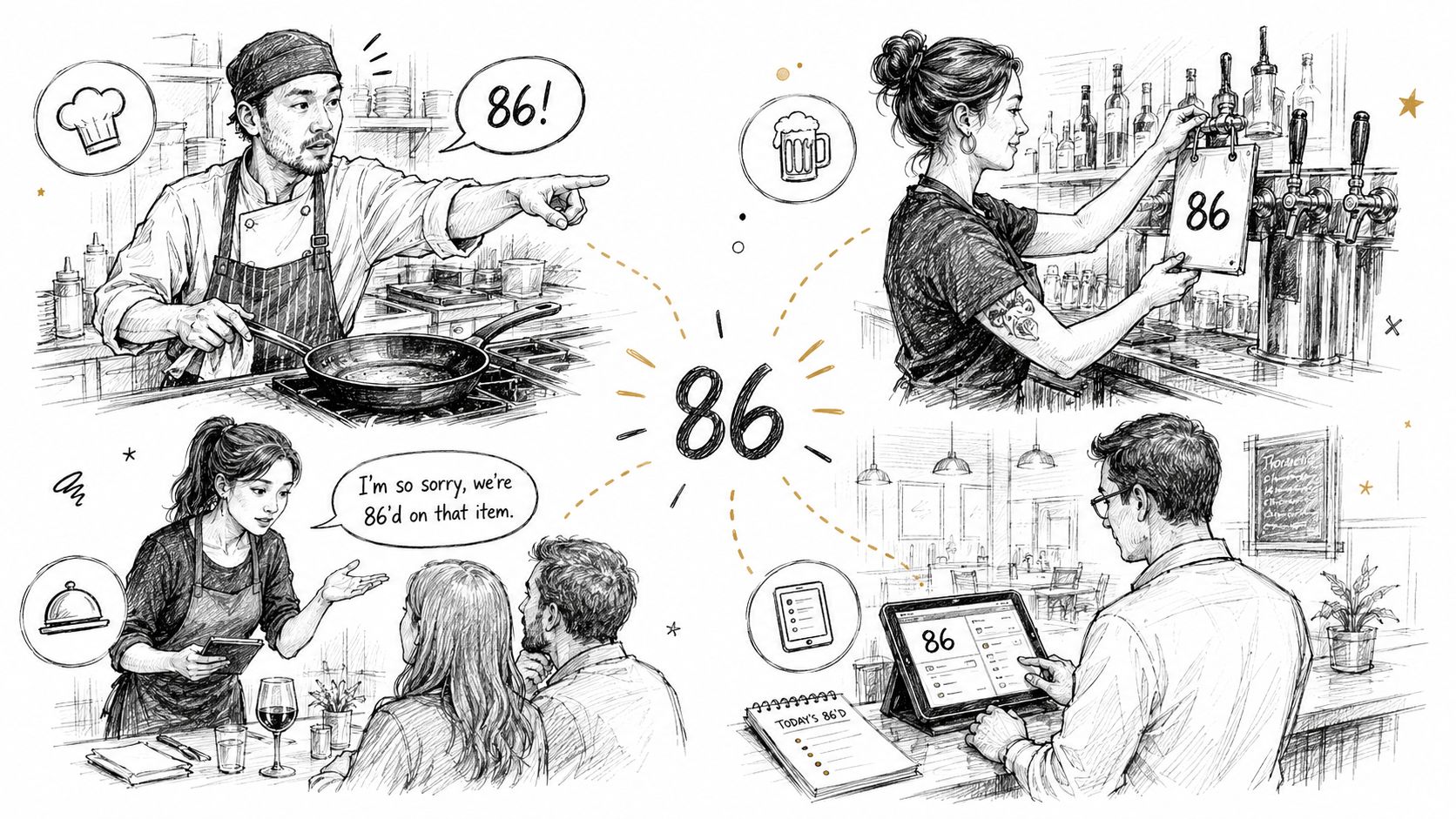
The bar follows a similar pattern. A bartender may call an empty keg 86'd, then tell the floor team which beer is unavailable and what replacement is pouring. If a cocktail depends on that beer or a particular garnish, the bar should identify the affected item rather than assume everyone will infer it.
A service chain with no missing link
A strong 86 process answers four questions quickly:
- What changed? Name the exact dish, ingredient, drink, or guest-related instruction.
- Who heard it? The receiving person should acknowledge the call so the sender knows it landed.
- What must stop? Remove the item from recommendations, tickets, menus, or service.
- What replaces it? Give staff a suitable alternative when one exists.
A server may then tell a table, “The salmon sold out tonight, but the roasted chicken has a similar herb profile.” The guest doesn't need the kitchen code. They need an accurate answer and a useful next choice.
This is also where related expressions can confuse new employees. 86'd means something has been removed or marked unavailable. On the fly means an order needs urgent preparation, not that an item has been 86'd. A team member who understands both phrases won't mistake a rush request for an inventory decision.
Restaurants using digital menus can connect the spoken call to a public update. A manager might remove the dish from the POS and then hide it from the QR menu, rather than leaving guests to discover the problem after ordering. Operators reviewing how to use a digital QR menu can apply the same principle to changing availability without replacing printed table materials.
For beverage programs, menu structure matters too. Teams planning to build a bar menu with AnchOps can make substitutions clearer by grouping drinks, listing recognizable ingredients, and giving staff a natural recommendation when a key component disappears.
The code works because it turns a changing stock situation into a shared service instruction. Without that handoff, one guest may hear “sold out” while another server continues selling the same item.
How to Communicate an 86 Without Frustrating Guests
Guests don't need to hear kitchen slang. They need timely, honest information that helps them choose what to order next. Saying “86'd” at the table can sound abrupt or confusing, especially to someone unfamiliar with restaurant terminology.
Five habits that protect trust
Alert the team first. Use a quick pre-service huddle and repeat the update through the channels your restaurant uses. A server shouldn't learn about the missing item from a guest who has already tried to order it.
Change the POS immediately. Remove or block the item so another server, cashier, phone order, or online customer can't submit it by mistake.
Sync public menus. If guests order through a QR or online menu, update that channel as soon as the availability changes. A menu that still displays an unavailable dish creates a problem before the server reaches the table.
Offer a deliberate substitute. Don't make the guest restart from scratch. Suggest a dish with a similar main ingredient, flavor direction, preparation, or price category, provided the alternative is available.
Keep the tone helpful. A brief apology is enough, followed by a clear option. Try, “I'm sorry, the salmon sold out this evening. The roasted chicken is a popular alternative, and it's available right now.”
The timing matters
Tell guests before they invest time in a decision whenever possible. If a table is opening menus, a server can mention the unavailable special during the greeting. If the item sells out after orders begin, contact the affected table promptly and explain the next step.
A digital menu can reduce the gap between the kitchen's status and the guest's view. Tools such as TopFoodApp can support live QR-menu changes, including hiding a dish or marking it out of stock, while restaurants can also use AI menu translation when they need menu information presented across languages.
The human response still matters. Technology can hide an unavailable item, but it can't recommend the right substitute for a guest's dietary preference or explain why the replacement fits their order. Staff judgment completes the process.
Practical rule: Never make the guest pay for an internal communication delay. Give the update early, explain it simply, and offer a real next choice.
Smart Ways to Reduce 86s and Keep Menus Live
Managers can't prevent every stockout. Demand changes, ingredients arrive late, and some products are too delicate to hold indefinitely. The goal is to make 86 events predictable, visible, and easy to manage.
Start with the inventory information that affects the menu most. Set practical par levels for high-use ingredients, identify which dishes depend on a single critical component, and give someone ownership of ordering and count verification. When a component supports several popular dishes, its status deserves special attention because one shortage can affect multiple menu promises.
Build resilience into the menu
Menu design can reduce the impact of a single missing ingredient. Share ingredients thoughtfully across dishes, create substitutions that preserve the dish's identity, and avoid relying on one hard-to-replace component for a large part of the menu. Seasonal specials also benefit from clear visibility controls, so staff can remove them promptly when the planned supply is gone.
Training helps catch problems earlier. A cook who reports a low ingredient before it disappears gives the manager time to adjust prep, brief servers, or feature another item. A bartender who notices the last usable bottle can prevent a guest from ordering a drink that the bar can't finish.
Keep every customer-facing channel current
The spoken call remains useful, but it shouldn't be the only control. A manager should update the POS, online ordering, printed service notes, and digital menus according to the restaurant's workflow. Restaurants using QR menus can review how to update a QR menu in real time to keep the public view aligned with live availability.
TopFoodApp offers digital menus with QR access, menu and dish visibility controls, real-time availability updates, allergen management, multilingual features, and AI-assisted menu digitization. Those functions can help a restaurant hide an 86'd item while keeping the rest of the menu available through the same customer-facing system.
The answer to why do restaurants use 86 is ultimately operational. The code gives a busy team a fast way to stop selling something that can't be fulfilled. Better forecasting, clearer training, resilient menus, and live digital updates make that signal less disruptive when it's still needed.
TopFoodApp helps restaurants create QR-based digital menus, manage dish visibility, update availability in real time, and present menu information across languages. Visit TopFoodApp to set up a live menu workflow that keeps 86'd items out of the guest view.