What Does a Food Runner Do: A Complete Guide
A plate can leave the kitchen perfectly prepared and still reach the wrong guest, arrive missing a modification, or sit too long at the pass. During a busy dinner service, the food runner prevents those failures from becoming the guest's problem. If you're asking, what does a food runner do, the short answer is that this person moves food from the kitchen to the dining room. The accurate answer is broader: a runner protects accuracy, timing, communication, presentation, and part of the restaurant's food-safety process.
Table of Contents
- A Night Shift Through the Eyes of a Food Runner
- Core Responsibilities and Daily Workflow
- Key Skills and Traits Successful Runners Need
- Pay Expectations and Career Entry Points
- Common Misconceptions About the Role
- Improving the Runner Experience and Integration
A Night Shift Through the Eyes of a Food Runner
The shift starts before the first plate moves. The runner learns the floor plan, checks table numbers and seat positions, reviews menu changes, and finds out which server owns each section. At the kitchen pass, completed plates begin arriving. The runner reads the ticket, checks the dish, notices a missing side or modification, and asks the expo or cook to correct it before leaving the kitchen.
Once the dining room fills, the work becomes a constant handoff. One table needs appetizers, another is waiting for a shared plate, and a large party has several dishes that must land at the right seats. The runner carries plates safely, identifies the food, places each dish correctly, and returns to the pass before the next order piles up.
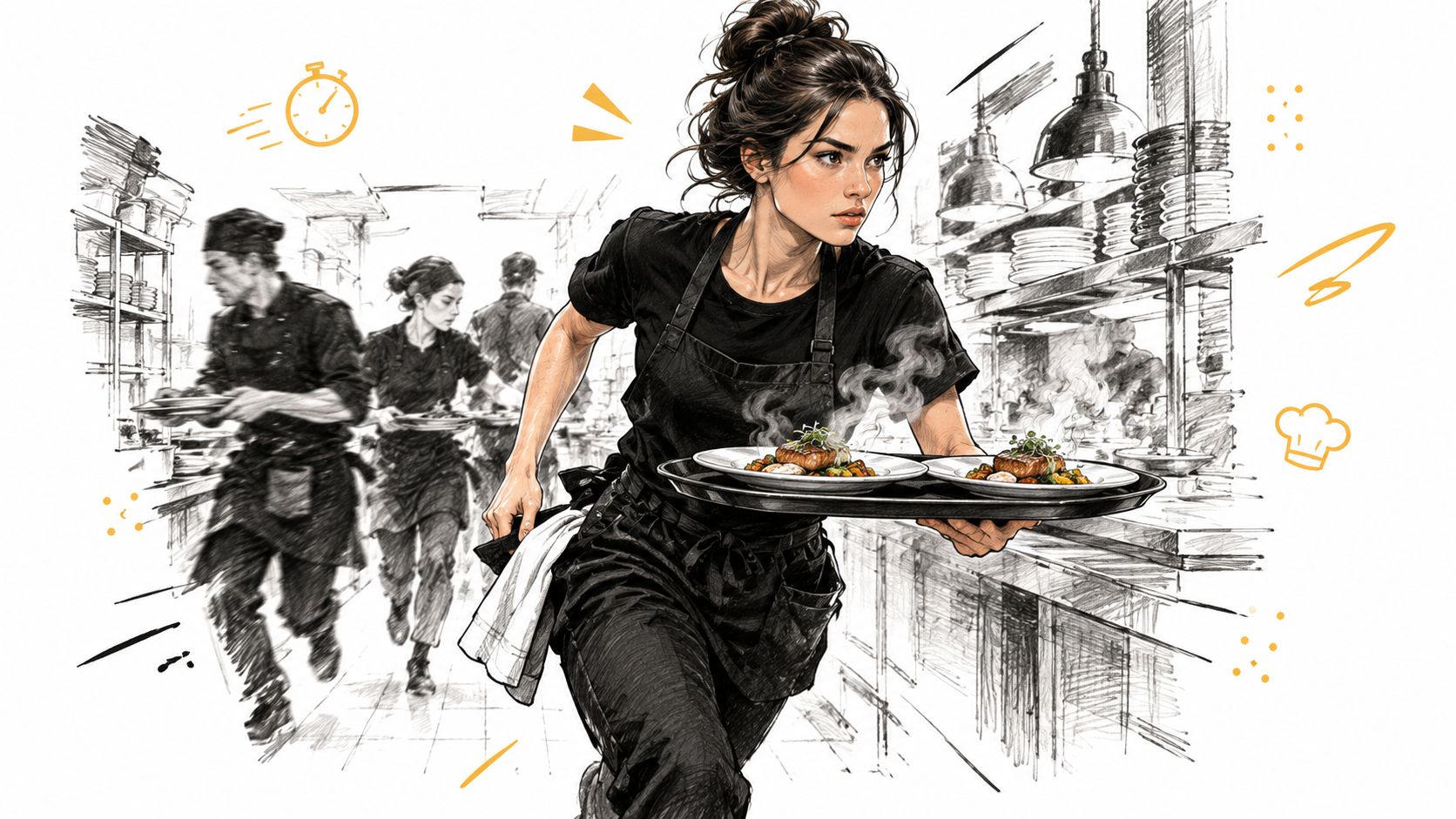
The mistakes are easy to recognize. A guest receives the wrong entrée, a server has to redistribute a table's dishes, or an allergen modification gets overlooked. The successful moments are quieter. Plates arrive together, hot food reaches the table promptly, and servers stay focused on hospitality instead of correcting preventable errors.
Practical rule: A good runner doesn't ask only, “Where does this plate go?” They ask, “Is this plate correct, safe to move, and ready for this guest?”
Core Responsibilities and Daily Workflow
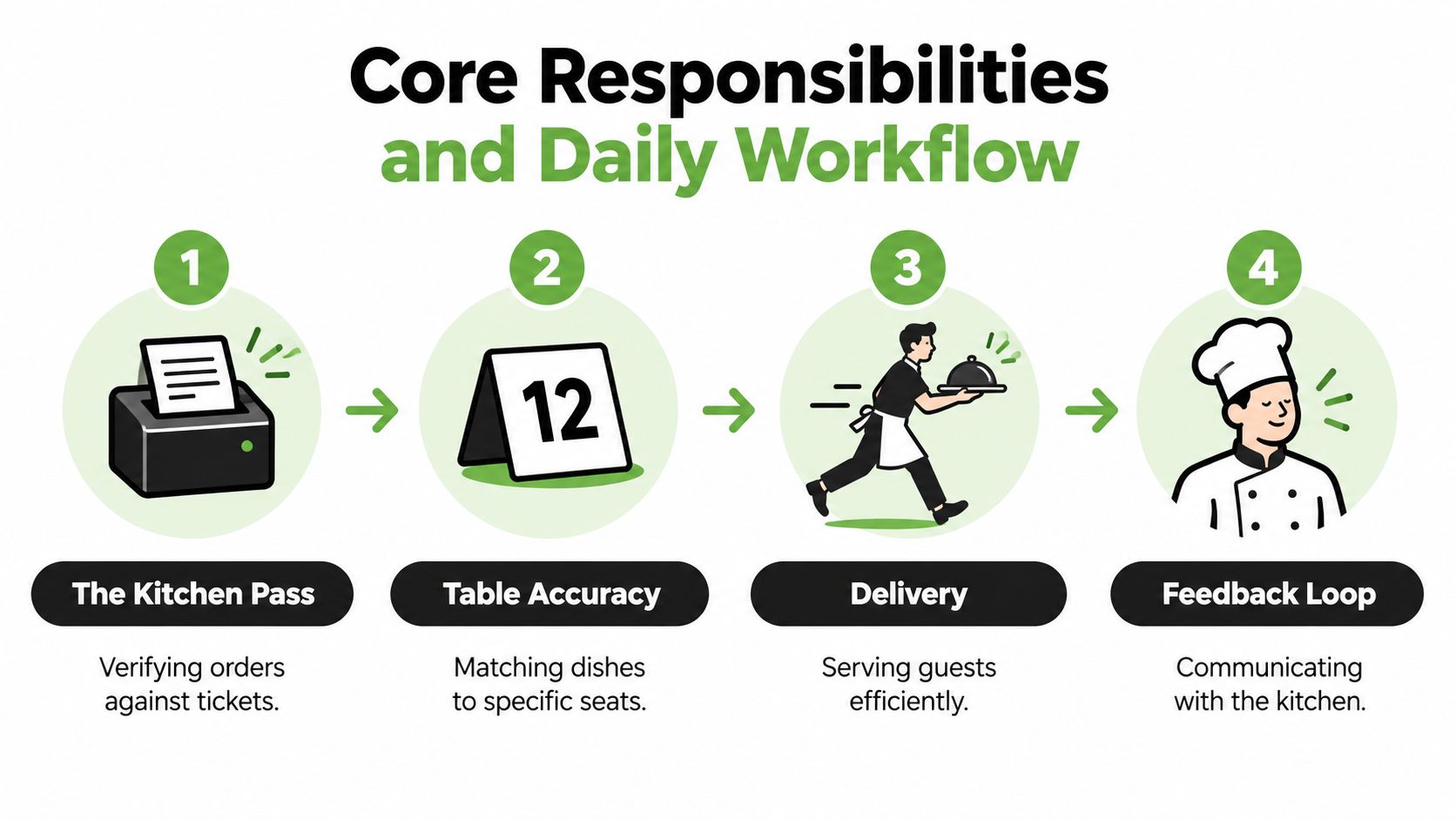
A food runner works at the point where kitchen production becomes guest service. The role starts at the pass and ends when every dish reaches the correct person. The standard food runner role description reflects that combination of ticket checking, safe carrying, table identification, communication, and clearing service equipment.
The pass is the first control point
Before picking up a plate, the runner checks the table, seat, item, modifications, sides, garnish, and presentation. A missing sauce or incorrect substitution should be fixed at the pass, not discovered after the plate reaches the guest. This small pause can prevent a re-fire, a delayed table, and an uncomfortable correction in the dining room.
Delivery requires more than speed
The runner identifies dishes and places them before the appropriate diners. For a large party, organizing plates by seat position is more reliable than carrying dishes by category and asking the server to sort them afterward. Hot dishes, cold items, allergy-sensitive orders, and foods that lose quality quickly may deserve priority over a plate that can wait briefly.
The runner also delivers bread, appetizers, desserts, condiments, and shared plates. Between runs, they may clear used dishes, return trays, replace cutlery, and keep the pass clear. Operators who want a broader example of maintaining clean handoff areas can also review this guide to professional vacation rental hygiene, especially its focus on repeatable cleaning routines.
Digital information matters too. If a menu item changes or an ingredient becomes unavailable, the runner needs current information rather than an outdated printed sheet. A practical real-time QR menu update process can help keep guest-facing details aligned with the kitchen, but staff still need a clear verbal process for urgent changes.
Key Skills and Traits Successful Runners Need
The strongest runners combine physical awareness with disciplined checking. They don't rely on memory when the dining room gets loud. They build habits that make the correct action easier under pressure.
Menu literacy comes first. A runner should recognize dishes by appearance, understand common sides and garnishes, and know which items require special handling. Rapid visual identification helps, but it never replaces the ticket. The kitchen-to-table quality-control explanation makes the central point clear: the runner should verify the dish, seat, modifiers, and allergy-related instructions before delivery.
The floor plan is a working tool
A runner needs more than table-number recognition. They must understand server sections, seat positions, entrances, narrow paths, and where guests are sitting. At a busy table, “the pasta” isn't enough. The runner should know which guest ordered it and place it there without making the server rearrange the meal.
Communication discipline separates reliable runners from risky ones. If a dish is missing, the runner tells the expo. If a table asks about an ingredient, the runner doesn't guess. They pause, consult the designated manager or kitchen authority, and communicate the answer or the uncertainty clearly. Restaurants can reinforce this behavior with a documented restaurant allergen compliance checklist.
Good runners also protect food quality. They carry plates without touching food-contact surfaces, keep trays and pass areas sanitary, handle allergen-sensitive dishes separately when required, and report spills or damaged presentation. Stamina matters, but judgment matters more. The fastest runner who delivers the wrong plate creates more work than a steady runner who checks before moving.
Pay Expectations and Career Entry Points
Food running is commonly grouped within broader food-and-beverage serving work, so public labor data doesn't usually show a separate “food runner” occupation. That makes broad employment figures useful for context, but they shouldn't be treated as a precise runner salary or job count.
The Bureau of Labor Statistics overview reports approximately 5.1 million jobs for food-and-beverage serving and related workers in the United States in 2025. The broader accommodation-and-food-services sector employed about 14.3 million people, while waiter and waitress jobs in accommodation and food services numbered approximately 2.09 million in that year.
The same source gives a related 2023 estimate of about 9.67 million restaurant and eating-place jobs in food-preparation and serving-related occupations, with an average annual wage of $33,720 for that occupational group. That figure describes the wider group, not a guaranteed food runner wage.
| Category | Employment estimate |
|---|---|
| Food-and-beverage serving and related workers, 2025 | Approximately 5.1 million jobs |
| Accommodation and food services, 2025 | About 14.3 million jobs |
| Waiters and waitresses in accommodation and food services, 2025 | Approximately 2.09 million jobs |
| Food-preparation and serving-related occupations in restaurants and eating places, 2023 | About 9.67 million jobs |
For a new worker, the role offers a direct introduction to full-service operations. A runner learns the menu, ticket flow, seating chart, service standards, and the working relationship between cooks and servers. Those skills can support progression into serving, bartending, expediting, supervision, or broader hospitality work. For applicants comparing openings, AI job search tools may help organize applications, but a strong interview should still demonstrate practical judgment, availability, and willingness to learn the restaurant's system.
Employment in food-and-beverage serving and related occupations is projected to grow 5% from 2025 to 2035, according to the same BLS source. The career value isn't only the starting pay. It's the operational knowledge gained on every shift.
Common Misconceptions About the Role
The biggest misconception is that a food runner is just a fast person carrying plates. Speed matters, but speed without verification creates wrong-table deliveries, missing modifications, remakes, and server interruptions. The runner is a final routing and quality-control point between production and the guest.
A second misconception is that food safety belongs only to cooks and managers. The runner handles the final segment before consumption. They help preserve the condition of hot and cold dishes, keep plates moving promptly, avoid contaminating food-contact surfaces, and maintain clean pass and service areas. A delay can damage presentation and sensory quality, while careless handling can create cross-contact opportunities.
Allergen questions require escalation
Runners may be asked whether a dish contains a specific ingredient or can be prepared safely. Guessing is the wrong response, even when the runner knows the menu well. A runner should pause, consult the designated person, verify current ingredient and cross-contact information, and explain clearly when an answer still needs confirmation.
This process matters because a menu label or guest-facing filter can organize information, but it can't guarantee that a dish is safe in every preparation environment. The Conference for Food Protection guidance described in the food runner hiring and role guidance emphasizes ingredient references, training for both front- and back-of-house staff, cross-contact prevention, and a designated person to answer allergen questions on each shift.
Technology doesn't remove that responsibility. Structured digital menus can make current ingredient and allergen information easier to find, especially when menus change. They don't replace trained human confirmation, kitchen awareness, or a clear escalation path.
The runner should be empowered to stop an incorrect or uncertain plate before it reaches the dining room.
Improving the Runner Experience and Integration
Restaurants get better results when they treat food running as a defined operating function rather than an extra task assigned without instruction. Onboarding should include the floor plan, seat map, menu vocabulary, ticket markings, tray and plate handling, sanitation expectations, and the exact person who answers allergen questions.
A simple rush-hour priority system helps. When several orders arrive together, runners should consider:
- Safety first: Stop and clarify allergy-sensitive or uncertain orders.
- Temperature next: Move hot and cold dishes promptly, without unsafe stacking.
- Accuracy throughout: Match each plate to the ticket, table, and seat.
- Communication always: Report delays, missing items, unavailable dishes, and guest questions to the right person.
- Reset between runs: Clear equipment and service clutter so the next handoff can happen cleanly.
The system should work across the restaurant's format. Hotels add room numbers and delivery routes. Food trucks and pop-ups may combine running with counter service. Multi-location groups need consistent menu names, seat maps, allergen references, and handoff language. A runner can't coordinate information that the operation hasn't kept current.
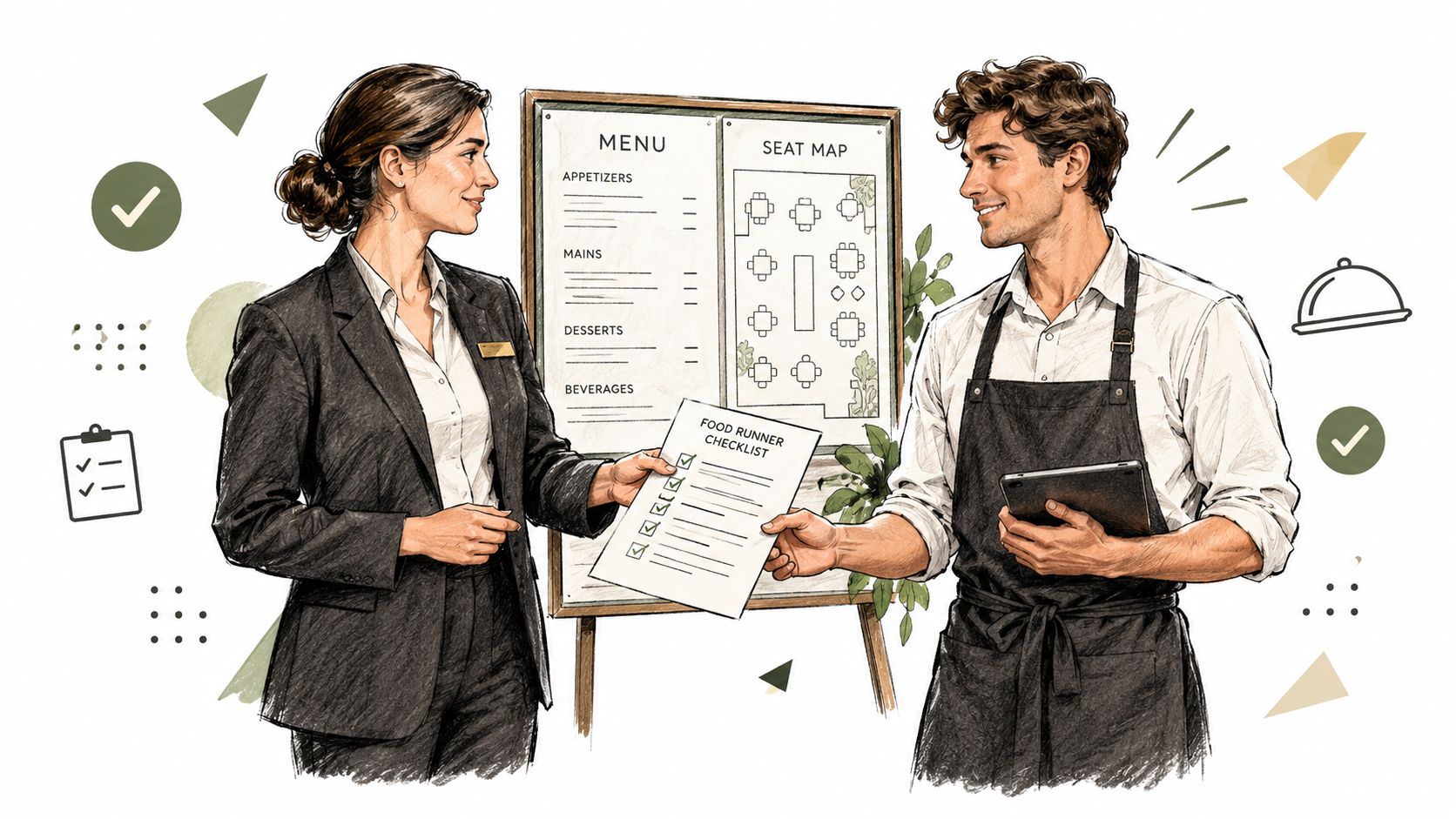
A well-maintained digital QR menu system can support current dish descriptions, structured allergen information, seasonal availability, and multilingual guest access. Managers should pair it with human training, a designated escalation contact, and a short pre-service briefing covering changes for that shift.
The practical test is simple: can a new runner identify the right guest, notice a problem, communicate it, and keep the pass moving without guessing? If the answer is yes, the restaurant has integrated the role properly. If not, add the missing information and practice the handoff before the next rush.
TopFoodApp helps restaurants create free QR-based digital menus with instant updates, structured allergen information, multilingual tools, and support for cafes, hotels, food trucks, and multi-location teams. Visit TopFoodApp to create a clearer source of menu information for runners, servers, managers, and guests.