The Ultimate Restaurant Allergen Compliance Checklist
Knowing the law is step one. Actually being compliant across your kitchen, your staff, and your guest-facing menu is another matter entirely. This checklist walks you through every layer of allergen management — from how you store ingredients to how a guest filters your menu on their phone.
Not sure what the law requires in your country? Start with our guide: How to Comply with Allergen Labeling Laws in Your Restaurant: A Complete Guide.
Phase 1: Inventory & Sourcing
-
Technical data sheets — Do you have the official ingredient breakdown for every packaged product in your pantry — sauces, breads, spices, dressings?
-
Supplier audit — Have you requested updated allergen statements from your suppliers in the last 6 months? Formulas change; your data should reflect it.
-
Hidden allergens — Are you checking secondary ingredients? (e.g., flour used as a thickener in sauces, soy in some vegetable oils, milk solids in margarine)
Phase 2: Kitchen Protocols & Storage
-
Color-coded storage — Are high-risk ingredients stored in sealed, clearly labeled containers, separated from safe alternatives?
-
Cross-contamination map — Does your kitchen have dedicated zones or tools for free-from preparation? (e.g., a separate toaster for gluten-free bread, dedicated utensils)
-
Shared fryer policy — If you use a shared fryer, is it clearly stated on the menu that fried items may contain traces from other allergens?
Phase 3: Staff Training
-
Know the major allergens — Can your kitchen and floor staff name the mandatory allergens in your region — without looking them up?
-
Response protocol — Does your team know exactly what to do when a guest mentions an allergy? (e.g., notify the chef immediately and direct the guest to the digital allergen filter)
-
Critical error awareness — Does the team understand that "picking the nuts off the top" of a finished dish is both a legal and safety violation — contamination has already occurred?
Phase 4: Guest Communication
-
Clear signage — Is there a visible sign at the entrance or on the table stating: "Please inform our staff of any allergies before ordering"?
-
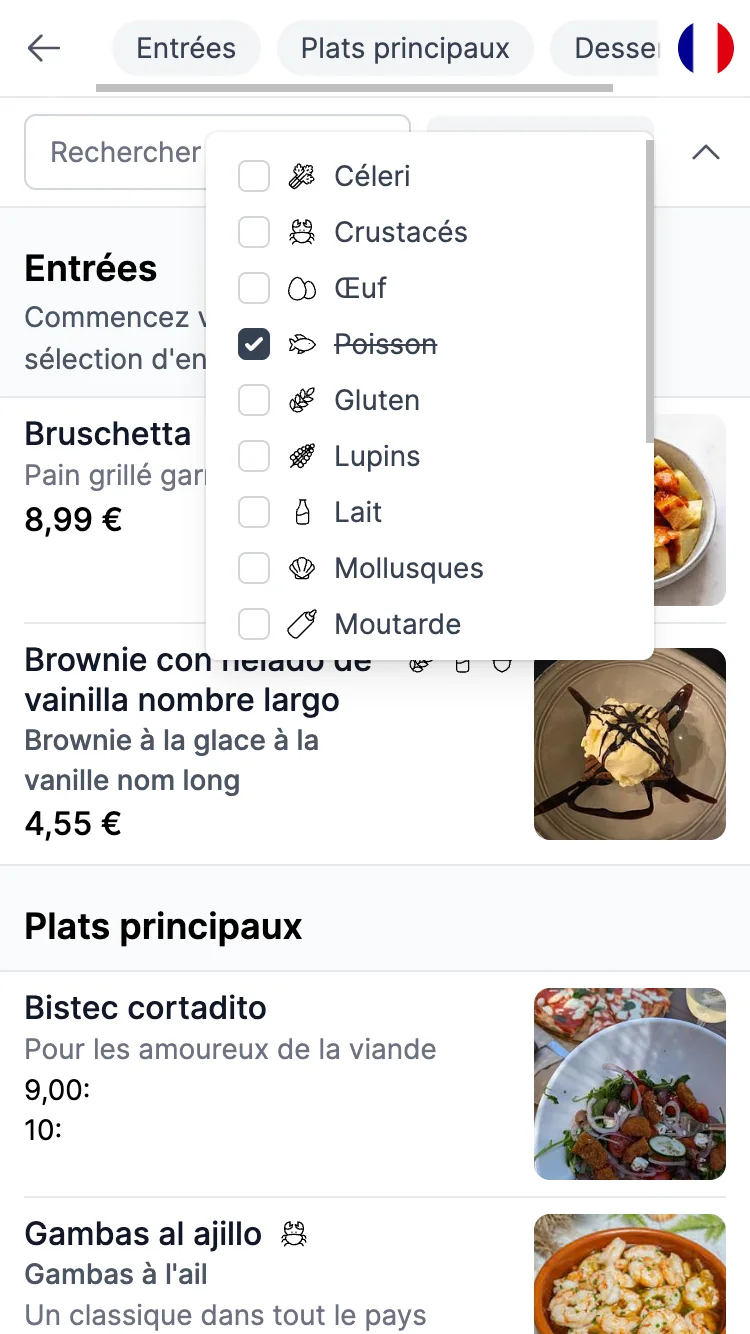
Digital accessibility — Is your allergen information accessible via QR code? This is the most reliable method — the data is always live and updated.
-
Interactive filters — Does your menu allow guests to hide dishes containing specific allergens automatically, without having to ask staff?
-
Multilingual information — If you serve tourists or international guests, is your allergen data available in their language to eliminate translation errors?
Phase 5: Verification & Ongoing Review
-
Recipe change protocol — Every time a recipe changes — even a minor ingredient swap — is the digital menu updated immediately before service?
-
Incident log — Do you keep a record of allergen-related near-misses or guest complaints to identify gaps and improve your processes over time?
Private events are the exception to everything above. For a wedding or a banquet you need each guest's allergies days ahead, not at the table, so they are normally collected along with the reply to the invitation: QRinvites.
Phase 4 is the easiest one to get right.
TopFood's digital menu automates guest communication entirely — interactive filters, live allergen data, multilingual support. Set it up once, and it handles itself.
Create your free allergen menuFrequently Asked Questions
How often should I update my allergen information?
Every time a recipe, ingredient, or supplier changes — before the affected dish is served again. With a digital menu, this takes seconds and updates instantly for all guests. With a printed menu, every change requires a reprint.
What counts as cross-contamination and does it need to be disclosed?
Cross-contamination occurs when an allergen is accidentally transferred to a dish that does not intentionally contain it — through shared fryers, utensils, or surfaces. Many food safety regulations require you to disclose significant contamination risk. When in doubt, disclose and direct guests to staff for guidance.
My staff speaks multiple languages — how do I ensure allergen info is consistent?
A digital menu removes the language dependency entirely. Guests filter allergens themselves on their phone, in their language, based on the data you entered once. No verbal translation required.
Is this checklist enough to be legally compliant?
This checklist covers the operational best practices common to most jurisdictions. Legal compliance depends on your specific country and region — always consult your local food safety authority or a legal advisor to confirm you meet the exact requirements for your area.
Frequently Asked Questions
How often should I update my allergen information?
Every time a recipe, ingredient, or supplier changes — before the affected dish is served again. With a digital menu, this takes seconds and updates instantly for all guests. With a printed menu, every change requires a reprint.
What counts as cross-contamination and does it need to be disclosed?
Cross-contamination occurs when an allergen is accidentally transferred to a dish that does not intentionally contain it — through shared fryers, utensils, or surfaces. Many food safety regulations require you to disclose significant contamination risk. When in doubt, disclose and direct guests to staff for guidance.
My staff speaks multiple languages — how do I ensure allergen info is consistent?
A digital menu removes the language dependency entirely. Guests filter allergens themselves on their phone, in their language, based on the data you entered once. No verbal translation required.
Is this checklist enough to be legally compliant?
This checklist covers the operational best practices common to most jurisdictions. Legal compliance depends on your specific country and region — always consult your local food safety authority or a legal advisor to confirm you meet the exact requirements for your area.